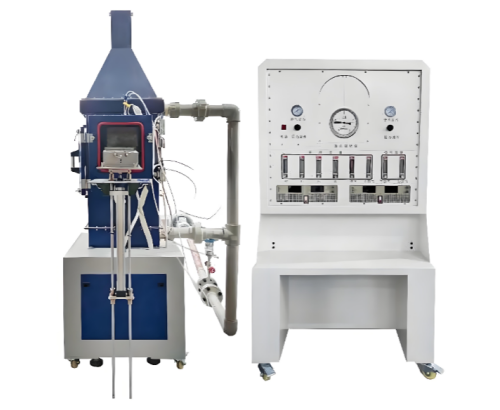
High-Frequency Reciprocating Tester
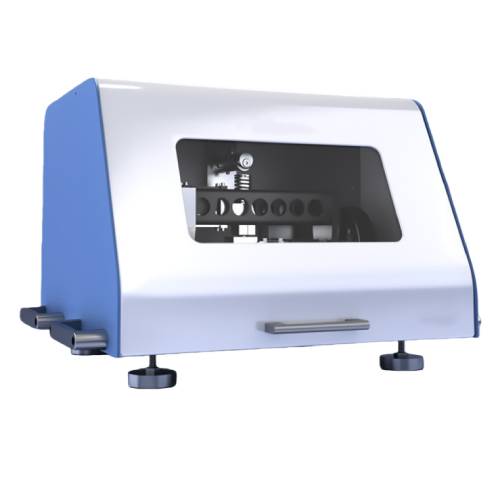


High-Frequency Reciprocating Tester is a fully automated, computer-controlled tribological testing system designed to evaluate fuel lubricity and the friction and wear performance of additives. It is widely used for friction and wear analysis of petroleum products and for measuring the lubricating properties of fuels, lubricating oils, greases, and additives. The new-generation system combines programmable control with high-precision piezoelectric ceramic sensors, enabling real-time friction force measurement with excellent repeatability and ease of calibration.
Application
The High-Frequency Reciprocating Tester is used in standardized and research-level lubricity testing, including:
Evaluation of diesel fuel lubricity and additive performance
Friction and wear analysis of petroleum products under boundary lubrication conditions
Lubricity measurement of lubricating oils, greases, and fuel additives
Comparative testing of different fuel formulations and additive packages
Research, development, and quality control testing in refineries, laboratories, and industrial facilities
Optional modules allow extended testing such as electrical contact resistance measurement, wear scar morphology observation, and gasoline lubricity testing.
Standards
The tester complies with or supports test methods defined in the following standards:
ASTM D6079 (Standard Test Method for Evaluating Lubricity of Diesel Fuels by the High-Frequency Reciprocating Rig)
GB/T 35137-2025 (Diesel fuel lubricity evaluation)
SH/T 0765 (Diesel fuel lubricity evaluation method)
ASTM D7688 (Standard Test Method for Evaluating Lubricity of Diesel Fuels)
ISO 12156-1 (Diesel fuel — Assessment of lubricity using the high-frequency reciprocating rig — Part 1: Test method)
CEC F-06-A-96 (Method for evaluating the lubricating performance of diesel fuel)
BS EN 590 (Automotive fuels — Diesel — Requirements and test methods)
JPI-5S-50-98 (Test method for evaluating diesel fuel lubricity)
Parameters
| Item | Description |
|---|---|
| Load Control | Real-time normal load control |
| Frequency Range | 1–200 Hz |
| Stroke Length | 10 µm to 2.8 mm |
| Friction Force Measurement | High-precision piezoelectric ceramic sensor |
| Temperature Range | Ambient to 180 °C; optional low-temperature and high-temperature up to 400 °C |
| Maximum Load | Up to 20 N (other load ranges available) |
Features
Standardized high-frequency reciprocating motion for lubricity evaluation
Fully automated, computer-controlled test system
Programmable test parameters for flexible testing conditions
Real-time friction force measurement using piezoelectric ceramic sensors
High repeatability and reliable calibration procedure
Supports standard reference oils and test samples
Optional expansion modules for advanced analysis and extended applications
Accessories
Standard test specimen and reference oil set
Piezoelectric ceramic friction force sensor
Electrical contact resistance measurement module (optional)
Metallographic microscope for wear scar analysis (optional)
Gasoline lubricity test module (optional)
Test Procedures
Install the standard test specimen and select the appropriate test configuration.
Set test parameters such as load, frequency, stroke length, and temperature.
Calibrate the system according to the standard procedure using reference oil.
Start the automated test sequence under computer control.
Measure friction force in real time throughout the test.
Complete the test after the specified duration or cycle count.
Evaluate lubricity performance based on test results and wear scar analysis.
FAQ
1. What is the primary function of the High-Frequency Reciprocating Tester?
The High-Frequency Reciprocating Tester is primarily used to evaluate the lubricity of diesel fuels and the friction and wear performance of fuel additives. It provides a standardized method for analyzing how fuels and lubricants behave under boundary lubrication conditions. By simulating high-frequency reciprocating motion, the tester generates data that are directly comparable to international standards such as ASTM, ISO, and CEC, making it suitable for regulatory compliance, product development, and quality control.
2. Which standards can be evaluated using this tester?
The tester supports a wide range of internationally recognized lubricity standards, including ASTM D6079. ISO 12156-1. GB/T 35137-2025. SH/T 0765. ASTM D7688. and CEC F-06-A-96. These standards are commonly used for diesel fuel lubricity assessment and ensure that test results are accepted in both regulatory and industrial applications.
3. How is friction force measured during the test?
Friction force is measured in real time using a high-precision piezoelectric ceramic sensor. This sensor provides fast response and high sensitivity, allowing accurate monitoring of friction behavior throughout the entire test cycle. The real-time data acquisition contributes to high repeatability and reliable comparison between different fuels, lubricants, or additive formulations.
4. What temperature conditions can be applied during testing?
The standard configuration supports testing from ambient temperature up to 180 °C. Optional configurations allow testing at lower temperatures or at elevated temperatures up to 400 °C, enabling evaluation of lubricity performance under a broader range of service conditions.
Leave Message Get Price