Rotary Reciprocating Friction and Wear Tester
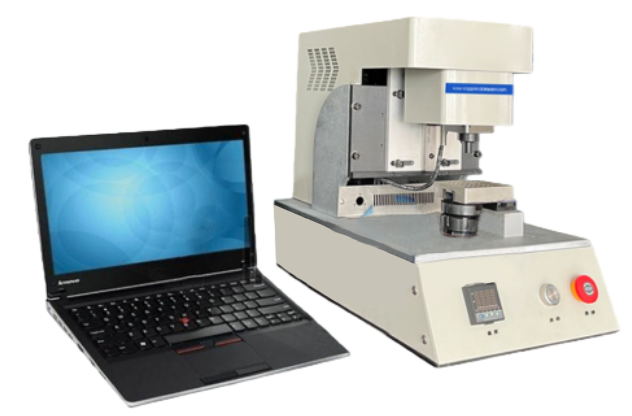


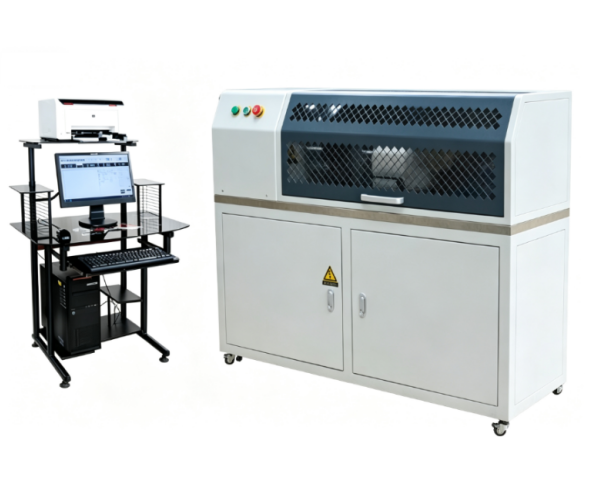
The Rotary-Reciprocating Friction and Wear Tester is a precision scientific instrument designed to evaluate the tribological performance of materials, surface coatings, and components. This device simulates various motion types including rotational, linear reciprocating, and ring-block motion, under controlled conditions such as load, speed, frequency, stroke, duration, counterface material, surface roughness, and hardness. It provides comprehensive assessments of material or coating performance by measuring key parameters like test force, friction force, and temperature. The system dynamically generates real-time curves for these parameters. Automatic shutdown and alarm protection are in place to ensure safety if preset limits are exceeded.
Application
This tester is designed for use in material selection research, surface coating evaluation, tribological studies, reliability testing, and industrial product quality inspection. It is ideal for laboratories, research institutes, and industrial testing environments that require accurate friction and wear analysis under carefully controlled mechanical and environmental conditions. Typical applications include:
Material performance evaluation (metals, polymers, composites)
Surface coating performance testing (PVD, CVD, thermal spray, etc.)
Friction and wear behavior of lubricants
Testing of tribological pairings (materials and coatings)
Industrial product testing (quality control, durability assessments)
Research on friction, wear, and lubrication performance
Reliability testing of materials and components
Standards
(1) GB/T 3960 — Plastics: Sliding Friction and Wear Test Methods
(2) GB/T 12444 — Metal Wear Testing Methods
(3) GB/T 30732 — General Principles for Tribological Testing
(4) ASTM G99 — Pin-on-Disk Friction and Wear Test Method
(5) ASTM G133 — Linear Reciprocating Friction and Wear Test Method
(6) ASTM G77 — Block-on-Ring Friction and Wear Test Method
(7) ISO 7148 — Guide to Selecting Tribology Test Conditions
(8) DIN 50324 — Friction and Wear Testing Methods
Note: Specific test parameters need to be customized based on the chosen standard.
Parameters
| Item | Specification |
|---|---|
| Maximum Test Force | 200 N |
| Speed Range | 1 – 2000 rpm |
| Frequency Range | 0.1 – 20 Hz |
| Maximum Reciprocating Friction Force | 50 N |
| Maximum Rotational Torque | 1.5 Nm |
| Maximum Reciprocating Stroke | 40 mm |
| Reciprocating Friction Mode | Ball-on-disk, Pin-on-disk |
| Rotational Friction Mode | Ball-on-disk, Pin-on-disk |
| Ring-Block Friction Mode | Ring-on-block |
| Temperature Range | Room temperature – 200°C |
| Friction Medium | Dry friction, Oil-lubricated |
| Dimensions | 530 mm × 345 mm × 500 mm |
Features
Multiple Friction Modes: Supports ball-on-disk, pin-on-disk, and ring-on-block testing configurations.
Real-time Monitoring: Continuously measures and displays test force, friction force, torque, displacement, speed, frequency, temperature, and friction coefficient.
Adjustable Temperature Control: Offers temperature control from room temperature to 200°C for diverse testing conditions.
Dry and Lubricated Testing: Supports both dry friction and oil-lubricated conditions.
High Precision: Uses weight loading and a symmetrical cantilever design to ensure load balance and stability. High-precision displacement sensors accurately measure friction forces.
Modular Software: Includes custom-developed software that supports multi-segment test configurations, real-time multi-curve rendering, and post-processing functions such as data export (txt, xlsx), filtering, and averaging.
Remote Monitoring: Allows for 24/7 real-time observation via computer, iPad, and Android/iOS devices, with instant alarm notifications in case of anomalies.
Flexible Data Acquisition: Offers selectable data acquisition frequencies ranging from 10 Hz to 10 kHz.
Accessories
(1) Friction testing main unit
(2) Electrical control cabinet
(3) Industrial control computer with LCD display, Advantech industrial PC, mouse, and keyboard
(4) Dedicated toolset for setup and maintenance
(5) Set of weights
(6) Two sets of specialized clamps for ball-on-disk and pin-on-disk testing configurations
(7) Two sets of friction test specimens for ball-on-disk and pin-on-disk testing
Test Procedures
Prepare the Sample: Mount the sample onto the test unit according to the desired friction mode (ball-on-disk, pin-on-disk, or ring-on-block).
Set Parameters: Input test parameters such as load, speed, frequency, stroke, temperature, lubrication, and time.
Start the Test: Initiate the test and monitor the real-time data (friction force, temperature, torque, etc.) displayed on the software interface.
Analyze Results: After completing the test, use the software’s post-processing tools to analyze and compare the data.
Repeat (if needed): Conduct additional tests for various materials, coatings, or conditions for comparative analysis.
Maintenance Information
Routine Cleaning: Ensure friction surfaces and sample holders are regularly cleaned to maintain test accuracy.
Calibration: Periodically calibrate force, torque, and displacement sensors for accurate measurements.
Lubrication: Check and replace lubricants as necessary, ensuring lubrication channels are clear and uncontaminated.
Software Updates: Regularly update the software and firmware to improve functionality and address any bugs.
System Check: Inspect the temperature control system, cooling units, and other vital components for proper function.
FAQ
(1) What materials can be tested with a rotary reciprocating friction and wear tester?
The instrument is suitable for metals, polymers, composites, surface coatings, and mechanical components. It can evaluate friction coefficient, wear behavior, and durability performance, helping researchers and manufacturers select suitable materials for different operating conditions.
(2) What is the difference between rotational and reciprocating friction testing?
Rotational testing simulates continuous circular sliding motion, while reciprocating testing simulates repeated back-and-forth movement. Different modes are selected according to actual application conditions, such as bearings, seals, sliding components, and mechanical contact surfaces.
(3) Can the tester evaluate coating wear resistance?
Yes, the instrument is widely used for coating performance evaluation, including PVD, CVD, and thermal spray coatings. By controlling load, speed, stroke, and temperature, users can analyze coating durability and friction characteristics under simulated working conditions.
(4) Does the instrument support lubrication condition testing?
Yes, the system supports both dry friction and oil-lubricated friction tests. Users can evaluate how different lubricants affect friction force, wear behavior, and material compatibility under controlled testing conditions.
(5) How should a laboratory select the right friction and wear tester?
Selection should consider material type, testing mode, load range, temperature requirements, and applicable standards. QINSUN instruments are calibrated and tested before shipment to ensure data accuracy. For application cases, please contact engineers for professional guidance.
Leave Message Get Price