Battery Enclosure Flame Jetting Test Apparatus
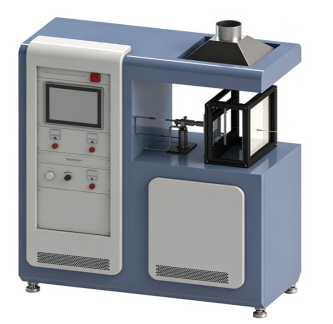


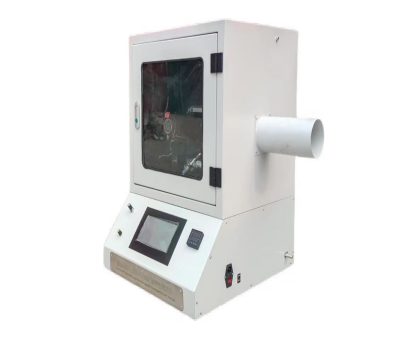
The Battery Enclosure Flame Jetting Test Equipment is used to evaluate the performance of battery enclosure materials under simulated battery thermal runaway conditions. It uses sheet materials to evaluate their performance during battery thermal runaway rather than testing the entire battery assembly, which can effectively reduce development costs and time.
Application
Simulates the impact of high-temperature flames and hot particles ejected during lithium-ion battery thermal runaway to evaluate the flame resistance and mechanical impact resistance of electric vehicle battery enclosures and protective materials. Uses 200 × 200 mm sheet specimens for material screening instead of full battery pack testing, helping battery manufacturers and material suppliers select materials at low cost. UL Solutions has incorporated it into a GM-approved BMS test protocol. The target customers are laboratories of new energy battery manufacturers, material suppliers, and automotive manufacturers.
Features
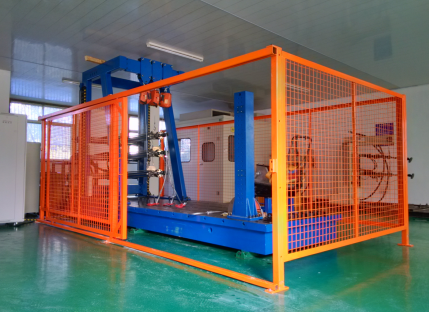
(1) Integrated steel structure with an open test platform to reduce heat accumulation.
(2) Stainless steel smoke collection hood installed above the test platform for collecting combustion gases.
(3) Imported flame jet burner capable of providing jet flames and sandblasting flames.
(4) The external diameter of the burner nozzle is approximately 28.6 mm, featuring 30 methane supply ports, 78 oxygen supply ports, and one sandblasting supply port.
(5) The burner can provide a 3 kW jet flame and a sandblasting flame at a rate of 1.5 g/s.
(6) Equipped with a spark igniter for ignition.
(7) Imported mass flow controllers are used to control methane and oxygen flow rates.
(8) Imported methane mass flow controller, with a range of 0–10 L/min and accuracy better than 2% F.S.
(9) Imported oxygen mass flow controller, with a range of 0–50 L/min and accuracy better than 2% F.S.
(10) Equipped with a flame barrier that opens automatically during testing.
(11) Automatic control of flame application and sandblasting flame application.
(12) Temperature measurement system equipped with four K-type thermocouples with a wire diameter of 30 AWG: flame temperature calibration thermocouple, thermocouple on the back of the specimen, thermocouple 25 mm above the back of the specimen, and a spare thermocouple.
(13) Equipped with a stainless steel specimen holder with calibration and testing positions, which can be automatically pushed into position during testing.
(14) The control box is integrated into the side of the test chamber for convenient operation and observation of the test.
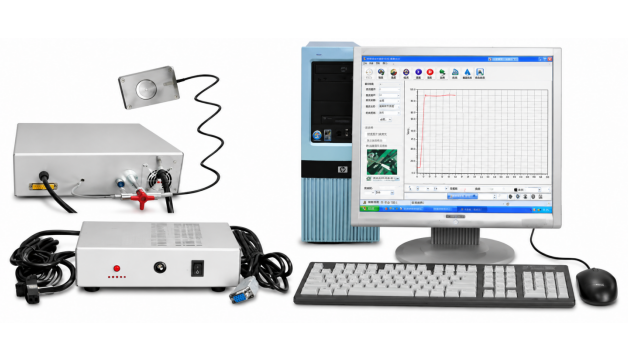
(15) Data acquisition system for recording temperature (0.1°C), time (1 s), and sandblasting signals.
(16) Operating software includes manual and automatic operation modes, with functions such as temperature calibration, manual programs, automatic programs, and report export.
(17) Windows-based operating software with the following functions:
l Flame temperature calibration.
l Recording three test temperatures and generating temperature-versus-time curves.
l Recording sandblasting signals and generating sandblasting-versus-time curves.
l Report output and management.
Performance Parameters
Item | Requirements |
Test Standard | UL 2596 Ed.2 (Method A: 15 s flame + 5 s flame + sandblasting = 20 s/cycle, up to 10 cycles) |
Flame | Methane–oxygen premixed jet flame, 3 kW, temperature 1200 ± 50°C (verified 60 mm above the burner outlet) |
Sandblasting | Aluminum oxide / silicon carbide, compressed air injection, flow rate 1.50 g/s ± 0.15 g/s |
Burner | Imported nozzle (consistent with UL laboratory equipment), external nozzle diameter approx. 28.6 mm, 30 methane ports + 78 oxygen ports + 1 sandblasting port |
Gas Control | Mass flow controllers (methane 0–10 L/min, oxygen 0–50 L/min, accuracy ±2% FS, with temperature and pressure compensation), flame arrestor |
Temperature Measurement | 4-channel K-type thermocouples (30 AWG): flame calibration, specimen backside, 25 mm behind specimen, spare |
Data Acquisition | Temperature resolution 0.1°C, time 1 s, synchronized recording of sandblasting signals |
Structure | Open steel test platform + stainless steel collection hood (adjustable exhaust), spark ignition, automatic specimen holder (calibration position / test position) |
Control | PLC / industrial computer + Windows software: temperature calibration, manual / automatic programs, temperature-time and sandblasting-time curves, report export |
Leave Message Get Price