Minimum Ignition Temperature (MIT) – Dust Cloud Tester
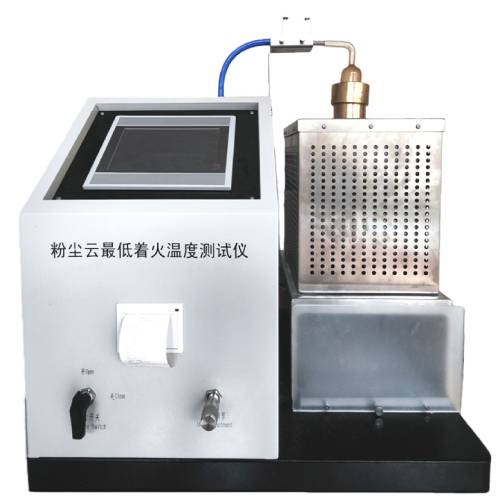


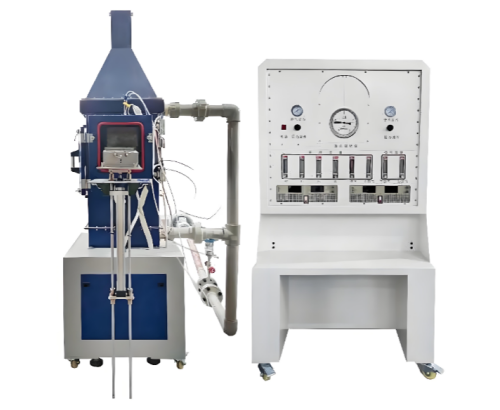
Dust Cloud Minimum Ignition Temperature Tester is mainly used to assess the explosiveness of dust in the production and processing places such as aluminum powder, zinc powder, plastic powder, intermediates of organic synthetic pharmaceuticals, wheat flour, sugar, wood chips, dyestuffs, glued wood ash, milk powder, tea powder, tobacco powder, coal dust, plant fiber dust and so on, and to accurately determine the minimum ignition temperature of the dust cloud.
Applications
1. Chemical/Pharmaceutical Industry: Testing the MIT (Mixed Explosion-Proof) of dust clouds for organic synthesis intermediates, plastic powders, dye dust, etc., for: Designing explosion-proof workshops (e.g., determining upper limits for ventilation temperatures); Compliance testing with explosion-proof standards such as ISO/IEC 80079-20-2. ensuring production equipment meets "Class e Increased Safety" protection requirements (matching IEC 61241-2 standard).
2. Metal Powder Processing Industry: Testing the MIT of metal dusts such as aluminum powder, zinc powder, and magnesium powder: Assessing ignition risks in powder production/storage processes, guiding the selection of dust removal systems and anti-static equipment; Meeting the testing requirements for the thermal safety performance of powder materials in ASTM E1491 standard.
3. Food Processing Industry: Testing the MIT of edible dusts such as flour, sugar powder, milk powder, and tea powder: Investigating dust explosion hazards in baking and sugar-making workshops, developing safe production procedures; Compliance with safety acceptance standards for food production enterprises (e.g., risk classification of workshop dust environments). 4. Light Industry/Building Materials: Test MIT (Mutual Aspect Ratio) for wood chips, tobacco dust, and plant fiber dust; guide the parameter setting of dust removal equipment in furniture and tobacco factories; match the dust environment safety assessment around "Electrical Equipment with Non-metallic Exterior Coverings" in EN 50281-2-1 standard.
5. Mining/Energy: Test MIT for coal dust and coke dust; evaluate the effectiveness of ventilation/cooling measures in coal mines and coal chemical workshops; provide dust ignition risk data for the layout of explosion-proof electrical equipment.
6. New Materials R&D: Test MIT for new 3D printing powders and battery material powders; clarify the dust safety performance of new materials in advance to avoid safety accidents during the R&D/trial production stage.
Standards
ASTM E1491-06:Standard Test Method for Thermal Performance of Powder Coatings Using Differential Scanning Calorimetry (DSC)
EN 50281-2-1:Cable Trunking Systems and Cable Ducting Systems for Electrical Installations - Part 2-1: Specific Requirements for Cable Trunking Systems and Cable Ducting Systems with a Non-Metallic Outer Covering - Coated or Uncoated
IEC 61241-2:Electrical Apparatus for Explosive Gas Atmospheres - Part 2: Requirements for Protection Level "e" (Increased Safety)
ISO/IEC 80079-20-2:Explosive Atmospheres - Part 20-2: Material Characteristics for Gas and Dust Atmospheres - Test Methods for Determining the Minimum Ignition Energy (MIE) of Dust Clouds
Technical Parameters
Operating environment | (5 to 45)°C, <85% RH |
Temperature range | Room temperature to 1000°C |
Rising time | ≤20min (room temperature to 500°C) |
Temperature control stability | ±5.0°C |
Temperature measurement accuracy | ±3.0°C |
Temperature measurement precision | ±0.1°C |
Powder spray pressure range | (0 to 100)kPa |
Pressure accuracy | ±5% |
Storage volume | 500mL |
Ambient temperature measurement range | (-10 to 60)°C |
Ambient humidity measurement range | (5 to 95)% RH |
Interface | USB*2 |
Power | 220VAC/50Hz |
Power | 2600W |
Dimensions | 670mm х 400mm х 590mm |
Features
1) Built-in internationally used testing standards, allowing testing according to standard parameters or custom parameters.
2) Employs fuzzy PID temperature control algorithm for high-precision temperature control.
3) Features a temperature sensor calibration interface for easy calibration and correction.
4) Uses a Gauder-Grunwald furnace with a built-in quartz tube to ensure reliable furnace operation.
5) The furnace cavity material is made of heat-insulating vacuum ceramic fiber, providing excellent thermal insulation.
6) Thermocouples are from international brands, ensuring long-term stable operation.
7) Includes ambient temperature and humidity detection, automatically recording experimental environment information.
8) Remote control ensures personnel safety.
9) Hierarchical user management allows for different levels of account management and control.
10) Plug-and-play USB interface for convenient data management.
11) Professional industrial design, simple and elegant.
12) 7-inch color LCD touchscreen dynamically displays the experimental progress.
Accessoriess
1. Core Component: ZR-FCY-8A Dust Cloud Minimum Ignition Temperature Tester - Heating Furnace: Quartz tube (controllable from room temperature to 1000℃), temperature control accuracy ±1% (above 500℃) or ±3% (below 300℃).
2. Dust Spraying System: Compressed air drives dust diffusion, pressure range 0~1 bar.
3. Safety Protection: Wireless remote control operation, audible and visual alarms, mirror-reflective observation window, etc.
FAQ
1.What is the minimum ignition energy of a dust cloud?
1 mJ to 1000 mJ
MIE values usually range from 1 mJ to 1000 mJ. A lower value means the dust is more easily ignited – even a small spark could cause an explosion. Knowing the MIE of your dust is important for: Designing equipment that won't create ignition sources.
2.What is the minimum ignition energy test?
The MInimum Ignition Energy (MIE) test is conducted to determine the lowest spark energy that will ignite a powder when dispersed in air, as a dust cloud.
3.What is considered a low mie?
MIE typically range from 1 mJ to 1000 mJ [Janes]. The lower the MIE, the higher is the risk of explosion as a very small energy input can trigger a dust cloud explosion. MIE < 3 mJ should be processed with specific measures, the dust is extremely sensitive to ignition.
4.What is mie value?
The Minimum Ignition Energy (MIE) value is used to assess the likelihood of ignition during processing and handling. It helps to define explosion prevention methods. MIE < 100 mJ indicates a potential for ignition from static discharges from personnel.
5.How many microns is a combustible dust?
420 microns
In general terms, a combustible dust is a combustible solid particle having an effective diameter of 420 microns (μm) or smaller and is capable of being suspended in air.
6.How can I select the suitable dust safety testing solution for my material?
Different dust materials may require different evaluation methods and test conditions. QINSUN engineers can provide professional selection guidance, customized configurations, and application solutions according to your materials, standards, and laboratory requirements.
Leave Message Get Price