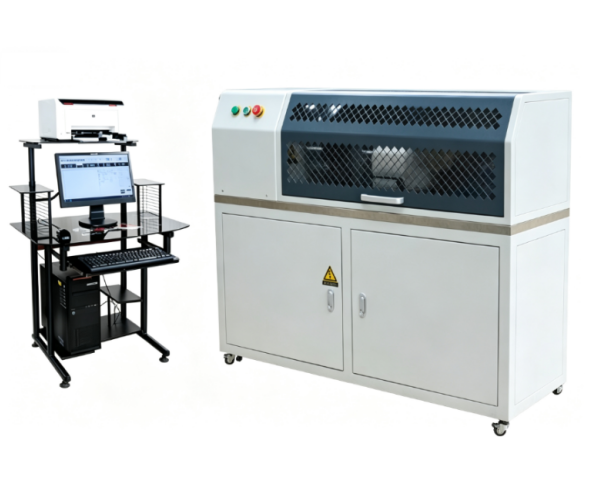
Coating Scratch Resistance Tester
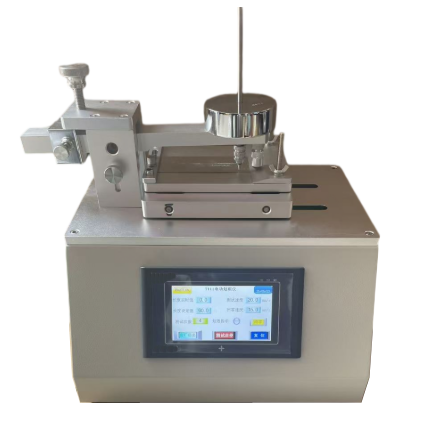


The coating scratch resistance tester is designed to evaluate the scratch resistance of coatings, in a method similar to standard coating scratch tests. This method uses an arched (circular or annular) stylus to test the scratch resistance of single coatings, such as paints, varnishes, or related products, as well as composite coatings. The test procedure involves applying the coating or coating system evenly onto a flat test panel with a uniform surface texture. After drying or curing, the test is performed by moving the panel under the arched (circular or annular) stylus, which is mounted to press down at a 45° angle on the panel surface. The applied load is continuously increased until the coating is scratched. The minimum load causing coating damage is determined as the lowest load at which at least 2 out of 5 repeated tests result in visible scratching.
Features
The work platform can move forward and backward, allowing the user to quickly switch between different test areas on the same panel.
Extra-large work platform accommodates test panels of various sizes (maximum panel size: 200 × 100 mm).
Adjustable balance arm enables scratch resistance testing on panels of different thicknesses (0–12 mm).
Technical Parameters
(1) Motor Power:60 W
(2) Weights (Masses):100 g × 1,200 g × 2,500 g × 1,1000 g × 2,2000 g × 1
(3) Stylus (Scratch Needle):
Circular/annular stylus
Diameter: (6.5 ± 0.1) mm
Radius: R0.8 ± 0.02 mm
Thickness: (1.6 ± 0.02) mm
Hardness: HRC 55–58
Surface: smooth, roughness < 0.05 µm
(4) Stylus Movement Speed: 0–10 mm/s
(5) Stylus Angle to Test Panel: 45°
(6) Power Supply: 220 VAC, 50/60 Hz
(7) Overall Dimensions (L × W × H): 430 × 250 × 375 mm
(8) Weight: 15 kg
FAQ
1.What is a Coating Scratch Resistance Tester?
A Coating Scratch Resistance Tester is a specialized instrument used to assess the scratch resistance of various coatings and finishes. It typically evaluates how well a surface can withstand scratches, abrasion, and wear, which is crucial for ensuring the longevity and durability of coatings on materials like metals, plastics, and wood.
2.How does a Coating Scratch Resistance Tester work?
The tester works by applying a controlled force to a stylus or tool that makes a scratch on the surface of the coated material. The depth and width of the scratch are measured to determine the coating's resistance to damage. Various testing methods, such as the Pencil Hardness Test or the Taber Abrasion Test, are often employed to ensure comprehensive assessment.
3.What industries use Coating Scratch Resistance Testers?
Coating Scratch Resistance Testers are widely used across several industries including automotive, aerospace, electronics, and construction. Manufacturers in these sectors rely on scratch resistance tests to ensure that their products maintain aesthetic and functional properties under various conditions.
4.Why is scratch resistance important for coatings?
Scratch resistance is essential for coatings because it directly impacts the durability and aesthetic appeal of the finished product. Surfaces that easily scratch can lead to more frequent maintenance and repairs, decreased product lifespan, and diminished customer satisfaction. Testing helps manufacturers develop more resilient coatings.
5.What factors can influence scratch resistance in coatings?
Several factors can impact the scratch resistance of coatings, including the type of resin used, the formulation of the coating, the thickness of the applied layer, and the curing process. Additionally, the environmental conditions, such as temperature and humidity during application and drying, can also affect the final scratch resistance.
Leave Message Get Price