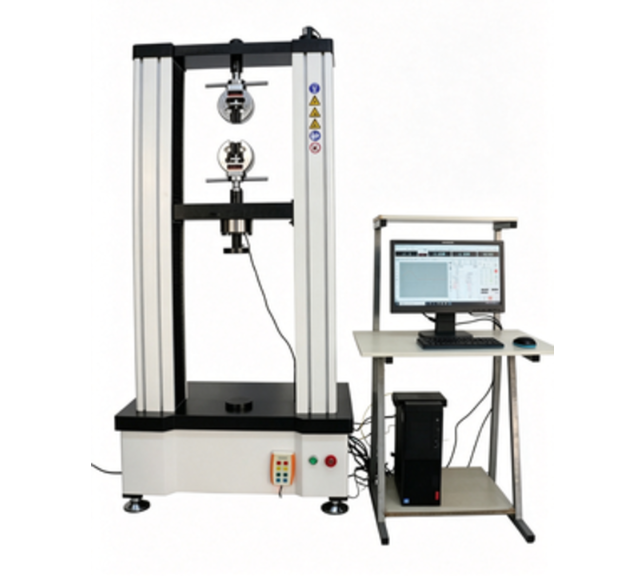
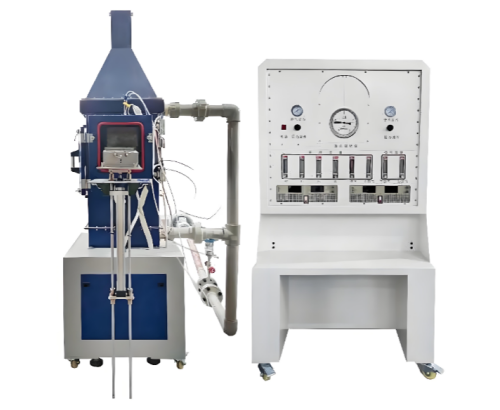
Three-Axis Helmet Impact Energy Absorption Tester
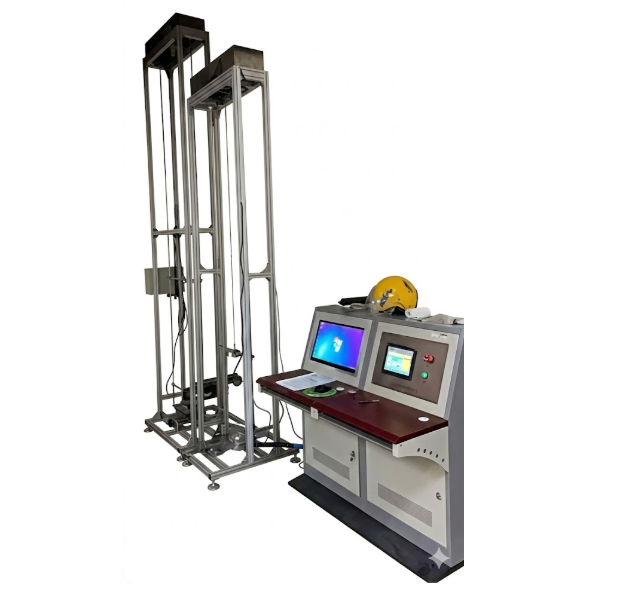


Three-Axis Helmet Impact Energy Absorption Testing Equipment Suitable for testing the impact energy absorption performance of electric bicycle and motorcycle helmets.
(1) Class A1 and Class A2 helmets shall meet the following technical requirements:
Peak acceleration shall not exceed 300 g;
The duration for which the acceleration exceeds 150 g shall not exceed 4 ms;
After completion of the test, the helmet shell shall not exhibit obvious fragment detachment (excluding components that are designed to detach easily).
(2) Class A3. Class B1. Class B2. and Class B3 helmets shall meet the following technical requirements:
Peak acceleration shall not exceed 400 g;
The duration for which the acceleration exceeds 200 g shall not exceed 2 ms (this requirement does not apply when the peak acceleration does not exceed 300 g);
The duration for which the acceleration exceeds 150 g shall not exceed 4 ms;
After completion of the test, the helmet shell shall not exhibit obvious fragment detachment (excluding components that are designed to detach easily).
Note 1: g = 9.80665 m/s²
Note 2: “Obvious fragments” refer to fragments of the helmet shell base material with a length exceeding 10 mm.
Application
(1) Motorcycle helmet testing
Evaluate the impact energy absorption performance and structural integrity of motorcycle helmets according to safety requirements.
(2) Electric bicycle helmet testing
Used to verify the impact protection capability of helmets designed for electric bicycle users.
(3) Helmet product quality control
Applied in production inspection to monitor consistency and performance stability of helmet products.
(4) Certification and third-party laboratory testing
Suitable for safety verification, product certification, and compliance testing in professional laboratories.
(5) Helmet research and development
Used for analyzing helmet shell structures, impact protection materials, and energy absorption designs.
Standards
(1)GB 811—2022:Protective Helmets for Motorcycle and Electric Bicycle Users
(2)GB/T 24429—2009:Sports Helmets — General Technical Specifications
(3)TCVN 5756:2017:Protective Helmets for Motorcycles and Mopeds Users
(4)QCVN 2:2021/BKHCN:National Technical Regulation on Helmets for Motorcycle and Moped Users
Parameters
Parameter | Specification |
Control Mode | Computer-controlled with LCD display for operation |
Test Station | Single station |
Test Headforms | Five half-head and full-head metal headforms: Extra Large, Large, Medium, Small, Extra Small |
Flat Anvil | T10A tool steel; impact surface roughness ≥ Ra 0.8; hardness ≥ 50 HRC; cylindrical impact surface, diameter ≥ 127 mm, thickness ≥ 15 mm |
Hemispherical Anvil | T10A tool steel; impact surface roughness ≥ Ra 0.8; hardness ≥ 50 HRC; spherical impact surface with radius R = 48 mm ± 1 mm |
Base | Metal, concrete, or combination thereof; mass ≥ 500 kg |
Acceleration Sensor | Triaxial accelerometer; range 0–1000 g; sampling frequency ≥ 8 kHz; accuracy ±2.5%; frequency response 0–1000 Hz; bandwidth cutoff −4 dB to −3.5 dB; roll-off −9 dB/oct to −25 dB/oct; three constant current sources |
Impact Height | 0–3000 mm, adjustable; real-time display; automatic stop at preset height |
Height Drive | Stepper motor with reduction gearbox |
Impact Velocity | 0–20 m/s; real-time measurement and digital display |
Release Method | Electronic quick-release |
Speed Measurement | Laser sensor with speed acquisition card |
Specimen Mounting | Standard interchangeable fixture; helmet manually rotatable 360°; supports crown, rear (occipital), front (forehead), and both side (ear) impact tests |
Data Acquisition | Data acquisition card with motion control card |
Test Report | Records impact velocity and acceleration curves; generates test data |
Equipment Dimensions | 1100 × 800 × 2400 mm (L × D × H) |
Power Supply | AC 220 V, 50 Hz |
Kerbstone Anvil | T10A tool steel; impact surface roughness ≥ Ra 0.8; hardness ≥ 50 HRC; length 126 mm ± 1 mm; height 51 mm ± 1 mm; inclined angle 105° ± 5°; rounded edge radius 15 mm ± 0.5 mm |
Features
1.Main Equipment Functions and Features
The impact height can be freely set and is displayed in real time; once the preset height is reached, the lifting mechanism stops automatically.
The base features high impact resistance, securely mounts all related components, and is provided with reserved mounting holes.
The headform and helmet clamping, engagement, and release are controlled electrically.
Dedicated test fixtures are used, allowing convenient replacement between full headforms and half headforms, enabling testing of full-face or half helmets.
The full-helmet test system is specially designed to allow 360° rotation of the helmet, enabling five impact locations to be tested: top (crown), rear (occipital), front (forehead), and both sides (ear areas).
Both the lifting and release mechanisms of the headform adopt a dual guide-rail structure to ensure smooth and stable vertical drop.
The flat anvil and hemispherical anvil use a plug-in mounting design, allowing quick installation and replacement.
Speed measurement and motion control are managed by a mechanical–electrical PLC control system, while data are collected by a computer. The system displays the acceleration peak value in real time, plots acceleration curves, and allows test reports to be stored and printed, with test time and curves clearly shown.
The impact area is equipped with a 180° rotatable high-strength protective shield.
The software includes a dedicated calibration module, allowing calibration and adjustment of the acceleration sensor, displacement, communication frequency, sampling frequency, and other parameters.
The software supports lifetime free upgrades and must be an independently developed, multifunctional helmet testing equipment operation and control system.
2.Hardware Features
The overall structure is constructed from thickened square tubing, channel steel, and solid steel, providing excellent stability.
The machine surface is finished with a baked paint coating process, offering strong corrosion resistance and an attractive appearance.
The test support frame is detachable, facilitating installation and setup.
3.Software Features
Controlled by a touchscreen PLC program, ensuring convenient and user-friendly operation.
Equipped with travel limit protection and leakage (earth fault) protection to ensure operational safety.
Includes abnormal fault alarm prompts to further enhance operational safety.
Configuration List
Main testing unit: 1 set
Power cable: 1 piece
User manual: 1 copy
Certificate of conformity: 1 copy
FAQ
1.Why is this product important?
This tester is crucial for ensuring the quality and safety of helmets. By evaluating the energy absorption capabilities, it helps manufacturers comply with safety standards and ensures that helmets provide adequate protection against impacts. It is used to test helmets under controlled conditions, providing consistent and reliable data for quality assurance.
2.What industries is this product suitable for?
This equipment is suitable for industries such as:
Helmet manufacturing
Motorcycle and electric bicycle accessory manufacturers
Safety product testing and certification organizations
Research and development institutions focusing on protective gear
3.What types of this product are available?
The equipment comes in a single test station configuration and supports five types of headforms (Extra Large, Large, Medium, Small, Extra Small). The setup is ideal for testing different helmet sizes, including full-face and half-helmets.
4.What performance indicators are evaluated during helmet impact testing?
The test mainly evaluates impact acceleration, acceleration duration, impact velocity, and energy absorption performance. According to GB 811—2022, different helmet categories have specific acceleration limits and duration requirements to assess protective capability.
5.What types of helmets can be tested with this equipment?
The system is suitable for motorcycle helmets, electric bicycle helmets, full-face helmets, and half helmets. Different headforms and impact fixtures can be selected according to helmet design and applicable testing requirements.
6. How does the three-axis acceleration sensor improve test accuracy?
The triaxial sensor measures acceleration changes in multiple directions during impact, providing detailed impact response data. This helps laboratories analyze helmet protection performance more accurately than single-direction measurement methods.
7.Why are different anvils used in helmet impact tests?
Flat, hemispherical, and kerbstone anvils simulate different impact conditions. Selecting the correct anvil according to the standard allows evaluation of helmet performance under different real-world impact scenarios.
8.How should a laboratory choose a suitable helmet impact testing system?
Selection should consider applicable standards, helmet types, required impact locations, measurement accuracy, and data management functions. For specific testing requirements and equipment configuration suggestions, please contact QINSUN engineers.
Leave Message Get Price