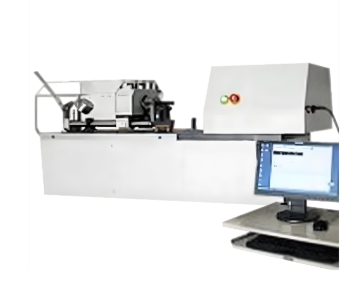
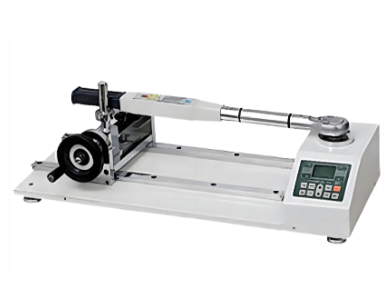
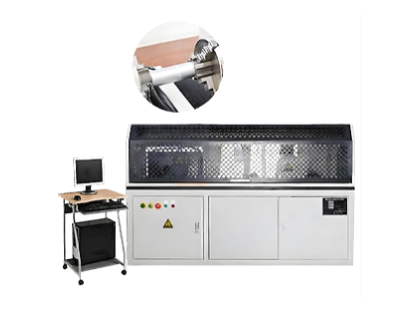
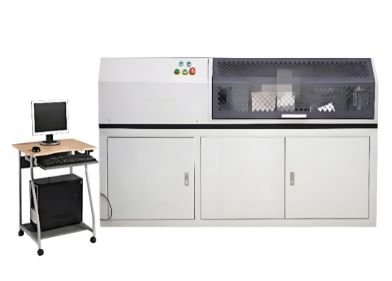
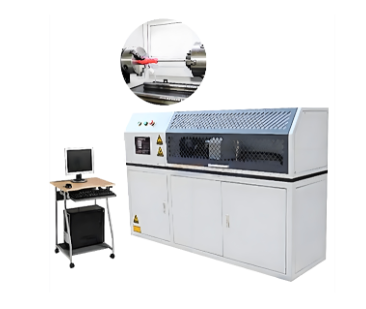
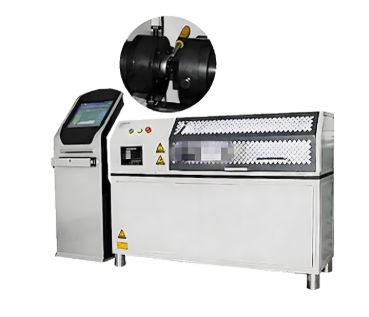
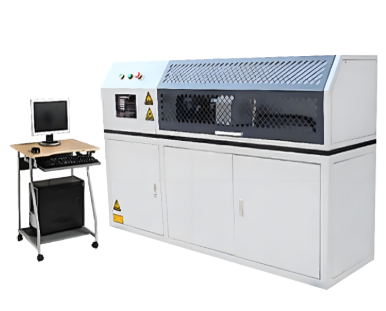
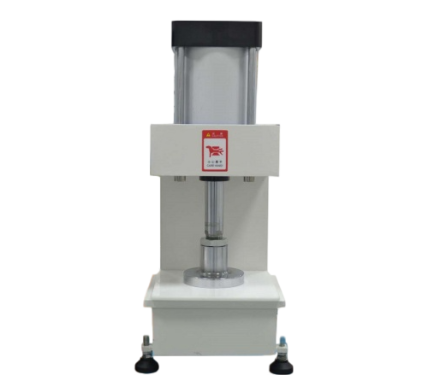
Extra-Fine Steel Wire Torsion Testing Machine
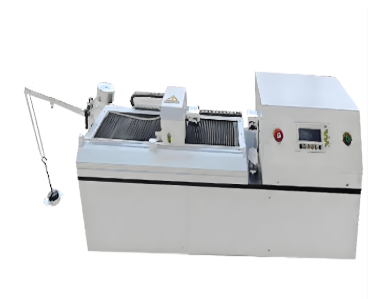


The Extra-Fine Steel Wire Torsion Testing Machine is designed to determine the ability of metal wires with a diameter (or characteristic dimension) of 0.05–0.5 mm to withstand plastic deformation under unidirectional or bidirectional torsion. It can also be used to reveal defects on the surface and internal structure of the wire.
Application
Fine metal wires such as steel wire, copper wire, aluminum wire, etc. Common applications include stainless steel wire, copper-plated steel wire, galvanized steel wire, silver-plated steel wire, and other fine wires.
Applicable Standards
The Extra-Fine Steel Wire Torsion Testing Machine complies with the following standards:
GB/T 239.1-2012 — Metallic Materials — Wire — Part 1: Method of Test for Unidirectional Torsion
GB/T 239.2-2012 — Metallic Materials — Wire — Part 2: Method of Test for Reverse Torsion
GB/T 239-1999 — Metallic Wire — Torsion Test Method
ISO 7800:1984 — Metallic Materials — Wire — Simple Torsion Test
ISO 9649:1990 — Metallic Materials — Wire — Reverse Torsion Test
Technical Parameters
| Applicable Wire Diameter | Φ0.05–Φ0.5 mm |
| Gauge Length Between Grips | 550 mm (customizable) |
| Maximum Counting Capacity | 999.9 |
| Speed Error | < ±5% |
| Minimum Revolution Reading | 0.1 revolution |
| Jaw Hardness (HRC) | 55–65 |
| Guide Rail Parallelism (mm) | < 0.2 |
| Jaw Coaxiality | < Φ0.4 mm |
| Approx. Test Bench Weight | 60 kg |
| Power Supply | 220 V, 50 Hz |
Features
The machine is equipped with a new-generation microcomputer (MCU) controller. The control circuit has been specially optimized according to the operating characteristics of the testing system, providing strong interference resistance, stable operation, and high reliability.
The display section features a large LCD screen with full-text prompts, providing clear and intuitive operation. The control program is designed according to ergonomic principles, ensuring easy operation, clear display, and accurate test results.
The controller responds to the user-defined test parameters and operating commands and controls the operation of the frequency converter, which in turn drives the motor to perform the required test functions.
Records the number of torsion revolutions of the specimen before fracture, with a counting accuracy of 1 revolution.
Preset torsion cycles can be set as required, with independent settings available for both forward and reverse directions.
The controller can control the output shaft to rotate at a specified speed.
The controller can control the forward or reverse rotation of the output shaft to apply torsional loading to the specimen.
Leave Message Get Price