Rapid Thermal Conductivity Tester for Geotechnical Materials
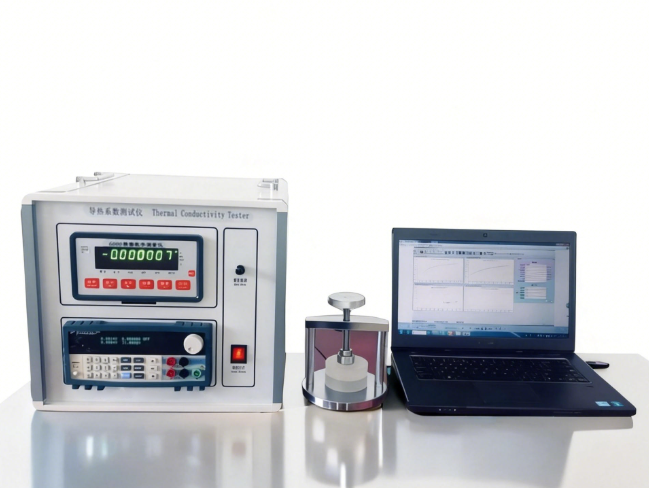


Rapid Thermal Conductivity Tester for Geotechnical Materials (Transient Plane Heat Source Method) is a high-precision instrument based on the TPS (Transient Plane Source) technique, utilizing a Hot Disk probe. This tester measures thermal conductivity of geotechnical materials, including soils, rocks, and other solid specimens.
The Hot Disk method offers several advantages:
Direct measurement of heat propagation, saving significant testing time.
Avoids errors caused by contact thermal resistance, unlike steady-state methods.
Minimal sample preparation; solid samples only require a relatively flat surface.
The tester provides rapid, accurate measurements, with broad applicability and the ability to reduce the influence of natural convection during testing. The instrument includes a special circular sample holder for geotechnical specimens.
Application
This tester is designed for thermal characterization of geotechnical materials, including:
Soils, clays, and sands
Rocks and rock aggregates
Cemented and compacted geotechnical specimens
Building foundation materials and insulation layers
Typical applications include:
Geotechnical research and engineering labs
Civil engineering thermal property evaluation
Environmental and geoscience studies requiring thermal conductivity data
Rapid testing of core samples or cylindrical specimens
Standards
ISO 22007-2:2008 – Determination of Thermal Conductivity and Thermal Diffusivity of Solids by Transient Plane Source (TPS) Technique
Parameters
| Item | Specification |
|---|---|
| Thermal conductivity range | 0.001–100 W/(m·K) |
| Measurement time | 1–60 seconds |
| Accuracy | Better than 3% |
| Temperature range | Standard: room temperature; optional: -20–120°C (additional cost) |
| Sample dimensions | Height ≥10 mm; diameter ≥45 mm; relatively flat surface required |
| Sample type | Solid geotechnical specimens, soil cores, rock slices |
| Operation | Fully automated via software |
| Power supply | AC 220V, 50/60 Hz; total power <500 W |
| Reference standard | ISO 22007-2:2008 |
Features
Rapid testing: Complete measurement in 1–60 seconds.
Minimal sample preparation: Solid specimens only need a flat surface.
Avoids contact resistance errors: Ensures accurate results for geotechnical materials.
Automated operation: Software-controlled measurement, data analysis, and report output.
Special sample holder: Circular holder designed for soil and rock specimens.
Broad applicability: Can test a wide range of geotechnical samples under varying temperature conditions.
Accessories
Main instrument
Analysis software (Chinese & English version)
Hot Disk probe
Geotechnical circular sample holder
Power cable and basic user manual
Test Procedures
Prepare two geotechnical sample blocks with relatively flat surfaces.
Place the Hot Disk probe between the two sample blocks, ensuring full contact.
Set the test parameters in the software, including sample type and temperature range.
Start the test; the software automatically collects temperature data and calculates thermal conductivity.
Review the results and generate a report.
Maintenance Information
Keep the Hot Disk probe clean and free from debris.
Regularly inspect the circular sample holder for wear or damage.
Calibrate the instrument periodically using reference materials.
Maintain a stable laboratory temperature to reduce measurement variability.
Store the device in a dry environment to protect electronics and thermal components.
FAQ
1. What types of geotechnical samples can this tester test?
This tester can test soils, clays, sands, rocks, cemented geotechnical specimens, and other solid core samples. The instrument is equipped with a circular sample holder specifically designed for geotechnical materials, ensuring accurate measurement even for irregularly shaped specimens.
2. How fast can this tester measure thermal conductivity?
Thermal conductivity measurements typically take 1–60 seconds, depending on sample size and composition. The TPS method allows rapid heat propagation measurement, eliminating the long stabilization times required in steady-state methods. The entire process is automated via software, including data collection and report generation.
3. Is special sample preparation required?
No. Solid geotechnical samples only need a relatively flat surface. The Hot Disk probe is placed between two sample blocks. For powders, loose soils, or wet samples, additional holders may be used, but no complex preparation is required. This makes testing fast and convenient.
4. Can the instrument operate at temperatures other than room temperature?
Yes. The standard configuration measures at room temperature. Optional temperature-controlled setups are available, covering -20 to 120°C for specialized research. This option must be specified when purchasing and may incur additional cost.
Leave Message Get Price