Unconfined Compressive Strength (UCS) Testing Machine
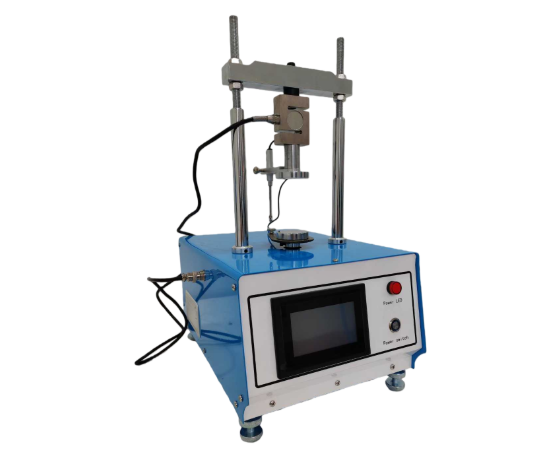


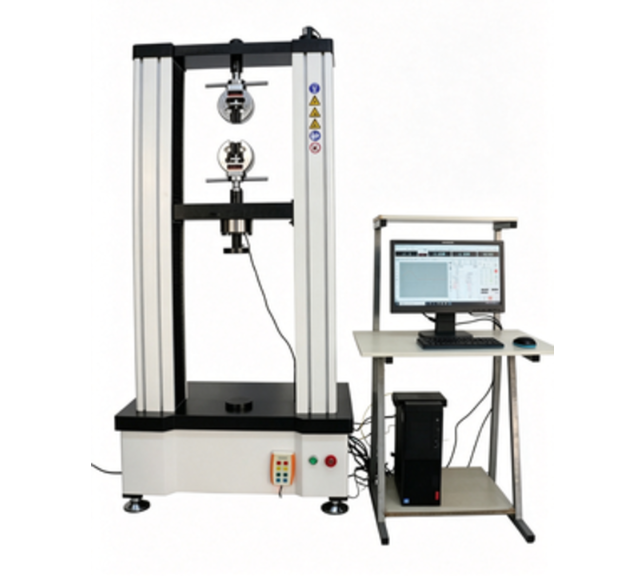
The UCS Testing Machine is a laboratory instrument designed to measure the unconfined compressive strength of cohesive soils. It provides accurate, repeatable results through a high-precision load frame, digital load and displacement sensors, and user-friendly control software. The device is widely applied in geotechnical engineering, construction quality control, research laboratories, and teaching environments.
Application
The UCS Testing Machine is used for:
Determining the unconfined compressive strength (UCS) of cohesive soils.
Soil strength assessment for foundations, embankments, and earthworks.
Research and teaching in soil mechanics laboratories.
Quality control in soil improvement and stabilization projects.
Standards
ASTM D1883 – Standard Test Method for Unconfined Compressive Strength of Cohesive Soil
ASTM D2166 – Standard Test Method for Unconfined Compressive Strength of Cohesive Soil
ASTM D7012 – Standard Test Method for Compressive Strength of Intact Rock Core Specimens
JT/T 0134-1993 – Determination of Unconfined Compressive Strength of Soil
BS 1377-4 – Methods of Test for Soils for Civil Engineering Purposes: Compaction-Related and Strength Tests
Parameters
| Parameter | Specification |
|---|---|
| Test speed | 1–5 mm/min (adjustable,
factory default: 1 mm/min) Fast return speed: 15 mm/min |
| Maximum load | 50 kN |
| Load resolution | 0.001 kN |
| Penetration plunger diameter | Φ50 mm |
| Displacement sensor | Range: 0–25 mm
Resolution: 0.01 mm Linearity: ±0.3% |
| Mold (cylinder) size | Inner diameter: Φ152 mm
Height: 177.8 mm |
| Column spacing | 280 mm |
| Screw top plate travel | 120 mm (with upper and lower limit switches) |
| Power supply | AC 220 V |
| Net weight | 98 kg |
| Gross weight | 108 kg |
Features
7-inch color touchscreen display with real-time load–displacement curve monitoring.
Supports data storage, printing, and upload to a PC for further analysis.
Compliant with international and domestic standards: ASTM D1883, ASTM D2166, ASTM D7012, JT/T 0134-1993, BS 1377-4.
User-defined deformation recording points and adjustable loading rate for flexible testing.
Built-in data processing functions for automatic calculation of CBR values.
Servo motor control with software feedback for stepless loading rate adjustment.
Integrated mini-printer for immediate result output.
Test Procedures
Install the soil sample in the mold and position the penetration plunger.
Set the test speed, deformation recording points, and measurement parameters via the touchscreen interface.
Start the test; the instrument automatically applies load while recording displacement and load data.
Monitor the real-time load–displacement curve.
Upon test completion, results can be printed directly or uploaded for further analysis.
Maintenance Information
Keep the load frame and plunger surfaces clean and free of debris.
Regularly inspect the displacement sensor and load cell for calibration accuracy.
Check the servo motor and drive system for proper operation.
Periodically perform full system calibration according to standard procedures.
FAQ
(1) What is this product?
It is a laboratory instrument for measuring the unconfined compressive strength of cohesive soils.
(2) What is this product used for?
It is used to evaluate soil strength for engineering, research, and quality control purposes.
(3) Why is this product important?
Soil strength measurement is essential for safe foundation design, embankment assessment, and quality assurance in civil engineering.
(4) What industries is this product suitable for?
It is suitable for geotechnical engineering, civil construction, soil mechanics research, and laboratory teaching.
(5) What types of this product are available?
The product supports adjustable loading rates, servo motor control, and data output modules for printing or PC storage.
(6) How does the UCS Testing Machine measure soil strength?
We apply a controlled axial load to the soil specimen while monitoring load and deformation changes. The system records the maximum load supported by the specimen before failure and calculates the unconfined compressive strength based on the test results.
(7) How can customers select a suitable UCS Testing Machine for their laboratory?
We recommend that customers confirm the required testing standards, maximum load capacity, specimen size, measurement accuracy, and laboratory application before purchase. Our QINSUN engineers can provide detailed technical parameters and professional guidance to help customers select suitable equipment for their testing requirements.
Leave Message Get Price