Simple Fuzzing Tester
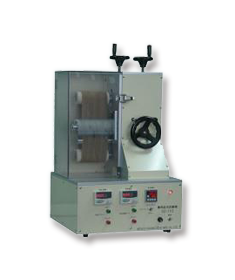


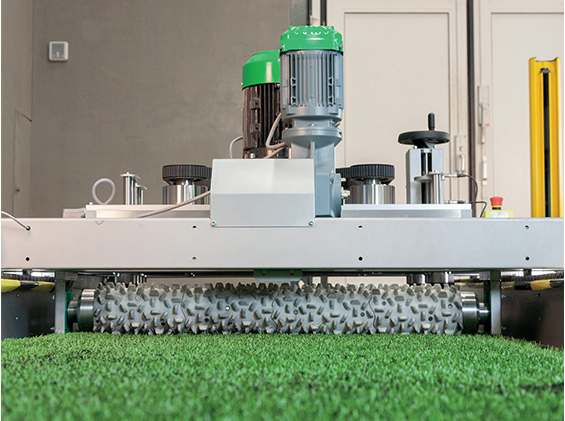
The Simple Fuzzing / Nap Testing Machine is designed for laboratory evaluation of fabric tendency to fuzz, the effectiveness of anti-fuzz treatments, and measurement of post-fuzz thickness increase or compression resilience. It allows controlled, reproducible processing of textile samples to simulate real-world fuzzing conditions.
Application
This instrument is suitable for:
(1) Evaluating fabric resistance to fuzzing or pilling.
(2) Testing the effectiveness of added anti-fuzz or finishing agents.
(3) Measuring thickness increase or elasticity improvement after fuzzing.
(4) Research and quality control of woven, knitted, and specialty fabrics in laboratories.
Standards
(1) JIS L1076 – Methods for Determining Pilling and Fuzzing of Textiles (B Method)
(2) ISO 12945 – Textiles – Determination of Fabric Propensity to Surface Fuzzing and Pilling
Features
Allows reproducible laboratory simulation of fuzzing.
Adjustable roller speed and tension for different fabric types.
Simple operation with LED timer for precise test duration.
Measures thickness increase or compression resilience of treated fabrics.
Compact design suitable for laboratory benches.
Parameters
| Parameter | Specification |
|---|---|
| Sample size | Approx. 100mm (width) × 600mm (length) |
| Sample transport rollers | Ø50 × W130mm, 2 rollers (rubber-wrapped) |
| Sample roller speed | Up to 250 rpm |
| Sample roller speed control | Frequency conversion variable speed |
| Sample tension adjustment | Adjustable roller position |
| Needle cloth roller | Ø60 × W130mm, 1 roller |
| Needle roller speed | Up to 250 rpm |
| Needle roller speed control | Frequency conversion variable speed |
| Needle contact pressure adjustment | Front-back movement of roller |
| Needle type | Standard fuzzing needle cloth (RA1) |
| Timer | LED display, freely programmable |
| Power supply | AC 220V, 50Hz |
| Dimensions | Approx. W400 × D370 × H670mm |
FAQ
(1) What is this product?
A laboratory testing machine designed to simulate fuzzing and measure fabric surface changes after treatment.
(2) What is the purpose of this product?
To evaluate fabric tendency to fuzz, assess anti-fuzz treatment effectiveness, and quantify thickness or elasticity changes after fuzzing.
(3) Why is this product important?
It ensures quality control, verifies treatment efficacy, and provides quantitative data for product development.
(4) What problems can this product solve for users?
Identifies fabrics prone to fuzzing, optimizes finishing treatments, and supports accurate product evaluation and R&D decisions.
(5) What types of this product are available?
Simple laboratory version suitable for woven and knitted fabrics, with adjustable speed and tension rollers.
(6) How is this product operated?
(1) Mount the sample on the transport rollers;
(2) Adjust the needle cloth roller speed and contact pressure;
(3) Set the desired test time on the LED timer;
(4) Start the test to allow the rollers and needle cloth to process the fabric;
(5) After completion, remove the sample and evaluate fuzzing, thickness, and compression resilience.
Leave Message Get Price