Fabric Thickness Gauge
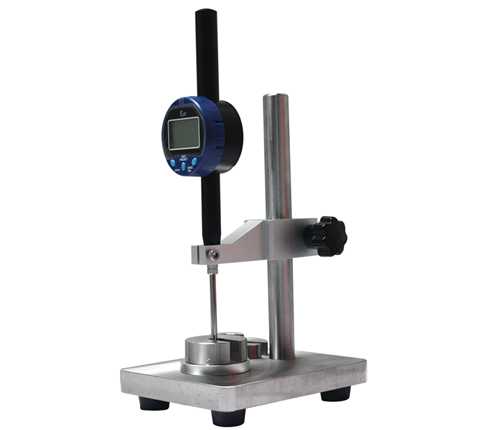


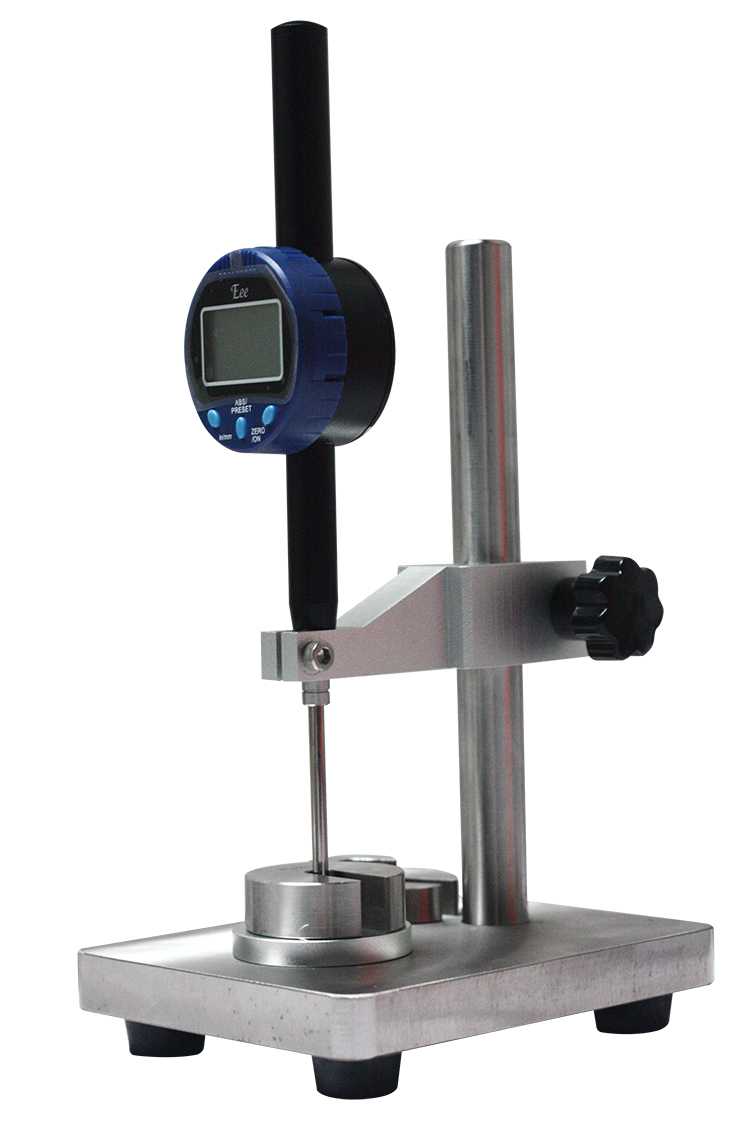
Fabric Thickness Gauge has a complete assortment of the pressure-foot and weights to conform the different test-methods.
As Analogue type is suitable for general textile and floor carpets mainly, digital type is suitable for pile fabric and knitted cloth.
The other pressure foot area and weight for special purpose can be manufactured as the user's requirements.
Applications
Fabric Thickness Gauge is an apparatus to measure the thickness of fabric, knitwear, film, rubber, soft urethane form.
Standards
JIS L1096/L1018, GB/T 3820, ISO 5084
Technical Parameters of Fabric Thickness Gauge
1. Measuring capacity (Standard-type): 0~10mm
2. Min. reading: 0.01mm
3. Area of pressure (Standard-type): 20cm2(φ: 50.5±0.01mm)
4. Measuring pressure: 0.3kPa (3gf/cm2), 0.7kPa (7gf/cm2) , 1.0kPa (10.2gf/cm2)
5. Access. weight: 80g (for 0.7kPa), 144g (for 1.0kPa)
6. Dimensions (approx.): W120×D150×H200mm
Features
(1) Accurate thickness measurement with 0.01 mm resolution.
(2) Multiple pressure settings support different textile testing methods.
(3) Interchangeable pressure feet and weights improve testing flexibility.
(4) Compact structure saves laboratory space and simplifies operation.
(5) Analog models are suitable for general fabrics and carpets.
(6) Digital models provide convenient reading for pile fabrics and knitted materials.
FAQ
(1) What materials can be measured with a Fabric Thickness Gauge?
This instrument is mainly used for fabrics, knitted textiles, carpets, films, rubber sheets, and soft foam materials. Different pressure feet and weights can be selected according to material characteristics and applicable testing standards.
(2) Why is pressure control important during fabric thickness measurement?
Textile materials are compressible, so different applied pressures may produce different thickness values. Standardized pressure conditions help laboratories obtain comparable results and improve consistency between different samples and testing locations.
(3) Which standards are commonly used for fabric thickness testing?
Common standards include ISO 5084, GB/T 3820, JIS L1096, and JIS L1018. The appropriate standard depends on the material type, product application, and customer testing requirements.
(4) How can laboratories maintain measurement accuracy?
Regular cleaning, checking the pressure mechanism, and periodic calibration are important for reliable results. QINSUN instruments are inspected and calibrated before delivery to ensure stable performance and accurate measurement data.
(5) Can QINSUN provide customized thickness gauges for special materials?
Yes. QINSUN can provide customized pressure feet, weights, and configurations according to specific material characteristics and testing requirements. Our engineers can assist with instrument selection and complete textile testing solutions.
Product Display
Leave Message Get Price