Multi-Functional Scratch Tester
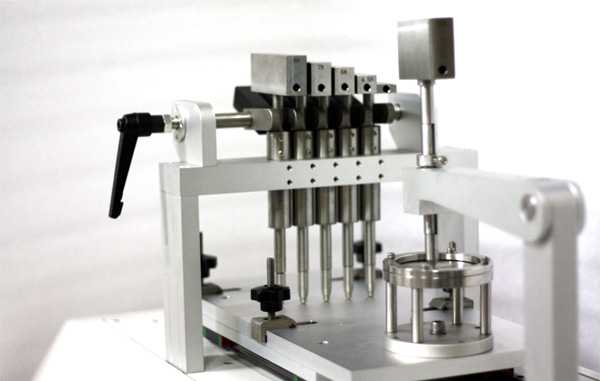


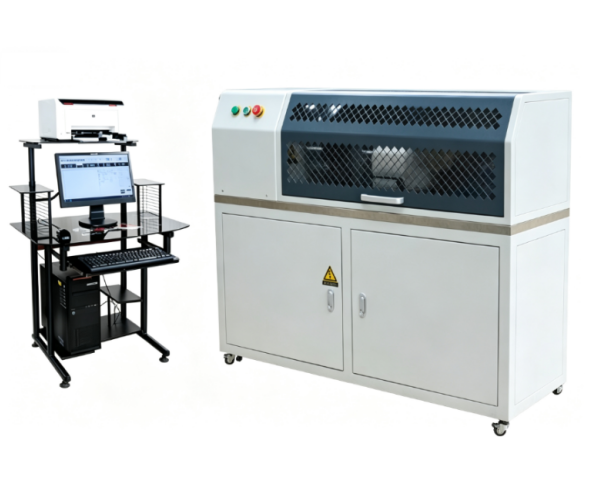
Scratches, plastic scraper three kinds of automotive industry common test methods into one. Multi-Functional Scratch Tester is suitable for a variety of automotive interior materials, such as plastic, rubber, leather, fabric, coating materials, non-coated materials and other composite materials, paints, inks, soft metals and other scratch resistance testing, Decorative products, plastics, rubber, leather and other fields of surface properties of a comprehensive test equipment.
Applications
Multi-Functional Scratch Tester is suitable for testing automotive interior materials, plastic, rubber, leather, coated fabric, coating materials, composite materials, paint, ink, soft metal and other industries, and widely used in product quality control, new product development performance verification, detection mechanism test and other fields.
Standards
PV 3952 Plastic interior parts scratch resistance test
Ford BN 108-03,13 Scratch resistance test
BMW 0180, PA-P 028 Scratch resistance test (Cross-cut method)
BMW GS 97034-9, PA 0015 Scratch resistance test
DAF KEUR 00824-401 Scratch resistance test (Cross-cut method)
DAF KEUR 00824-402 Scratch resistance test
GME 60401 Scratch resistance test (Cross-cut method)
GM 14829 Scratch resistance test (Cross-cut method)
Jaguar-Landrover TPJLR.52.004 Scratch resistance test
GM N 3943 Scratch resistance and scratches for plastics - Five fingers test
LP 463DD-18-01 Scratch resistance and scratches for plastics - Five fingers test
GMW 14130,14688 Scratch resistance test
8350Z-SDA-9000 Scratch resistance test
NES M M0159 Polypropylene interior parts scratch resistance test
Multi-Functional Scratch Tester features
1. The instrument consists of the motor drive mechanism, scraping components, sample clamping fixtures and other components.
2. Scratch components include scraper brackets, scraping fingers, Scratches positioning sleeve, presses device (weights and weight support bars).
3. The instrument can be free to install, replace, disassemble different specifications of the scraping fingers. it also can impliments uniform speed unidirectional straight line scratch movement under different load .
4. The instrument that adopts embedded systems, man-machine interface operation automatically controls the test process . The use of precision servo motor, ball screw drive has a decisive role in controlling the scratch speed accuracy under the relevant standards .
5. The instrument uses tungsten carbide material to make scraping finger for increasing the instrument life.
6.The instrument which uses aluminum and stainless steel is appearance concisely、 lightweight and corrosion-resistant.
Technical Parameters
| Items | Parameters |
| Test partition | Finger / plastic finger scratch test |
| Stroke range | 10-200mm |
| Speed range | 10-200mm/s |
| Speed buffer | 10±1mm |
| Scratch pressure | 2N,3N,5N,7N,8N,10N,12N,15N,20N (Optional) |
| 100 cross-cut scratches moving distance | 0.5mm-2mm(Below 2mm should be equipped with a special scratch) |
| Scratch head material | Stainless steel; tungsten carbide (optional) |
| Scratch head diameter | 0.5mm、0.75mm、1mm(Erichsen318)、3mm、5mm、7mm |
| Plastic finger (optional) | Poly (PMMA); diameter 16 mm, thickness 1 mm, edge radius 0.5 mm, hardness shore D85. |
FAQ
(1)What is a Multi-Functional Scratch Tester used for?
A Multi-Functional Scratch Tester is used to evaluate the scratch resistance and surface durability of different materials by applying a controlled scratching force to the test surface. It is commonly used for coatings, paints, plastics, automotive interior materials, electronic housings, and other products where surface damage resistance is an important performance requirement. The test helps manufacturers compare materials, improve surface treatments, and perform quality control.
(2)How is scratch resistance measured using a Scratch Tester?
Scratch resistance is usually evaluated by applying a specified load through a scratching tool and moving it across the surface of a test specimen. After testing, the scratch mark or surface damage is evaluated according to the selected test method. Depending on the application, results may be assessed by visual inspection, damage classification, critical load, or comparison with reference samples.
(3)What materials can be tested with a Multi-Functional Scratch Tester?
A Multi-Functional Scratch Tester can be used for a wide range of materials, including paint coatings, powder coatings, plastic parts, metal surfaces, decorative films, automotive interior components, and electronic product housings. The suitable test method and fixture depend on the material properties and the performance requirements of the product being evaluated.
(4)Why do coatings and painted surfaces need scratch resistance testing?
Coated surfaces are often exposed to friction, cleaning, transportation, installation, and daily handling during their service life. Poor scratch resistance may lead to visible marks, coating damage, or reduced product appearance. Scratch testing allows coating manufacturers and users to evaluate whether a coating system provides sufficient surface protection and durability for its intended application.
(5)What standards are commonly used for scratch resistance testing?
Scratch testing standards depend on the material and industry application. Commonly referenced methods include ISO 1518-1/ISO 1518-2 for scratch resistance of paints and varnishes, ASTM D3363 for pencil hardness evaluation of coatings, and ASTM D7027/ISO 19252 for scratch testing of polymer materials and coatings. Users should select the applicable standard according to the product type and testing purpose.
(6)What is the difference between scratch hardness and scratch resistance?
Scratch hardness evaluates the ability of a material surface to resist being scratched by a harder object, while scratch resistance focuses more on the material's ability to withstand scratching forces or surface damage under specific test conditions. Different test methods may measure different aspects of surface performance, so the appropriate evaluation method should be selected based on the application requirements.
(7)What factors can affect scratch test results?
Scratch test results can be affected by several factors, including applied load, scratching tool type, scratching speed, surface roughness, coating thickness, material hardness, sample preparation, and evaluation method. To obtain reliable and comparable results, laboratories need to maintain consistent test conditions and follow the selected testing standard.
(8)How should users choose a suitable Scratch Tester?
When selecting a Scratch Tester, users should consider the materials to be tested, required testing standards, load range, scratching method, fixture compatibility, and evaluation requirements. For example, automotive suppliers may focus on interior material scratch performance, while coating manufacturers may require evaluation methods suitable for paint or powder coating systems. The equipment should match the actual application rather than only comparing basic specifications.
Leave Message Get Price