Foam Rebound Resilience Tester
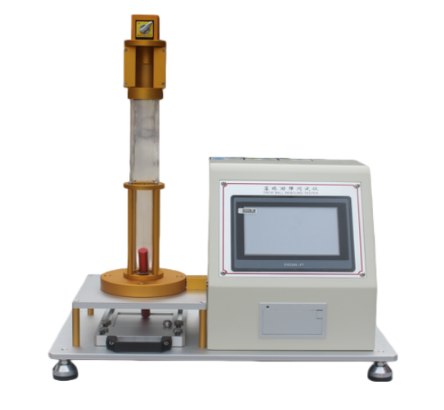


The Foam Rebound Resilience Tester is a laboratory instrument designed to evaluate the elastic recovery performance of soft and flexible materials, including polyurethane foam, sponge, rubber, and similar materials. The tester measures the rebound height of a steel ball after free fall onto the specimen surface and calculates the rebound resilience value. This test provides important data for evaluating cushioning performance, comfort, and material durability in various applications.
Applications
The instrument is widely used in material testing and product quality control across multiple industries:
(1) Furniture manufacturing — evaluation of sofa cushions, mattresses, and seating foam
(2) Automotive industry — testing of seat foam, interior cushioning materials, and vibration damping components
(3) Packaging industry — assessment of protective foam materials
(4) Footwear industry — evaluation of midsole and insole foam performance
(5) Material research laboratories — development and comparison of elastic polymer materials
(6) Quality inspection institutions — standardized foam performance testing
Standards
Complies with:
GB/T 6670-2008 — Test method for rebound resilience of flexible cellular materials
Technical Specifications
| Item | Specification |
|---|---|
| Power Supply | 220V, 50Hz |
| Test Resolution | 1/10,000 second |
| Rebound Coefficient Range | 25%–80% |
| Rebound Accuracy | < 1.5% |
| Steel Ball Drop Height | 460 ± 0.5% mm (GB standard) / 500 ± 0.5% mm (ASTM standard) |
| Steel Ball Diameter | Ø16 mm (−0.05 mm tolerance) |
| Data Processing | Automatic calculation of average rebound height and rebound rate |
| Display System | LCD display with Chinese interface |
Features
(1) High-precision rebound measurement system ensures reliable and repeatable results
(2) Automatic calculation of rebound height and resilience coefficient reduces human error
(3) Dual standard drop height configuration (GB and ASTM compliant)
(4) Digital timing system with high-resolution measurement capability
(5) LCD interface with clear parameter display and easy operation
(6) Stable steel ball release mechanism ensures consistent test conditions
(7) Suitable for both laboratory analysis and production quality control
(8) Compact structure with simple installation and maintenance
Environmental Requirements
Testing must be performed under controlled conditions:
Temperature: 23 ± 2°C
Relative Humidity: 45%–50%
Stable environment free from vibration and airflow interference
Maintenance
(1) Keep steel ball surface clean and free of deformation
(2) Regularly calibrate drop height mechanism
(3) Ensure vertical alignment of release system
(4) Clean specimen platform after each test
(5) Verify sensor accuracy periodically
(6) Store instrument in dry and stable environment
FAQ
(1) What does a Foam Rebound Resilience Tester measure?
The tester measures the rebound resilience of flexible materials by recording the rebound height of a steel ball after impact. The result is used to evaluate material elasticity, energy recovery, and cushioning performance.
(2) Which materials can be tested with this instrument?
It is mainly used for flexible cellular materials such as polyurethane foam, sponge, and similar elastic materials. It is commonly applied to foam products used in furniture, automotive, packaging, and footwear industries.
(3) Why is rebound resilience testing important for foam materials?
Rebound resilience indicates how effectively a material can recover after compression or impact. The test helps manufacturers compare material performance and ensure products meet expected comfort and durability requirements.
(4) Which standards are used for foam rebound testing?
The tester is commonly used according to GB/T 6670-2008 for flexible cellular materials. Some applications may also refer to ASTM D3574 depending on the material type and customer requirements.
(5) How to choose the right model for foam testing?
Selection depends on the tested material, required standards, accuracy requirements, and laboratory conditions. QINSUN engineers can recommend a suitable solution based on your testing needs. Contact us for professional support.
Leave Message Get Price