Dust Cloud Minimum Ignition Energy Tester G-3000A
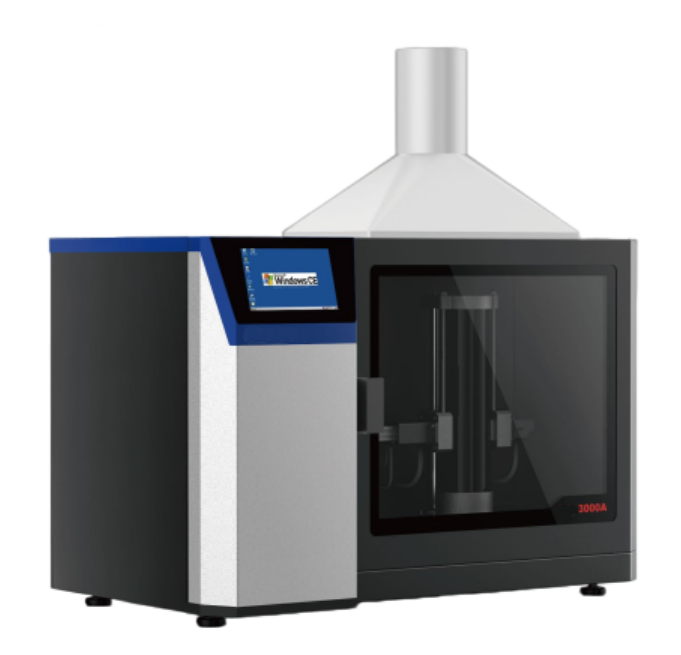


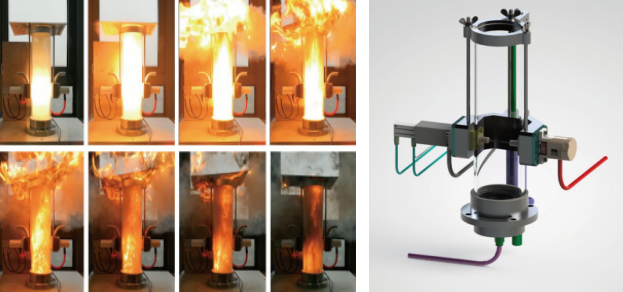
The G-3000A Dust Cloud Minimum Ignition Energy Tester is a specialized instrument used to determine the minimum ignition energy (MIE) required to ignite a dust cloud. A certain mass of dust sample is dispersed into a Hartmann tube using compressed air at a specified pressure to form a dust cloud. The cloud is ignited using a defined spark energy, and through a series of tests, the minimum ignition energy of the dust sample is obtained. The instrument reflects the sensitivity of dust ignition from an energy perspective and is suitable for evaluating the potential explosion hazard of dust clouds.
Application
(1) Metal Powder Industry
Applicable to aluminum powder, zinc powder, and other reactive metal dusts.
(2) Chemical and Pharmaceutical Industry
Used for organic intermediates, synthetic powders, and fine chemical materials.
(3) Food Industry
Suitable for flour, sugar, milk powder, starch, and other combustible food dusts.
(4) Energy and Industrial Materials
Evaluates coal dust, plastic powders, dyes, and plant fiber dust.
Standards:
ASTM E2019
IEC 61241-2-3
ISO/IEC 80079-20-2
GB/T 16428
Technical Specifications:
Item | Specification |
Working environment | (5–45)°C, <85% RH |
General mode spark energy | 1 mJ, 3 mJ, 10 mJ, 30 mJ, 100 mJ, 300 mJ, 1000 mJ, 3000 mJ |
Custom mode spark energy | — |
Charging voltage | (0–15) kV |
Discharge load | No load, 1 mH inductive load |
Test vessel | 1.2 L Hartmann tube |
Electrode | Tungsten electrode, diameter 2 mm |
Electrode gap | (2–10) mm, adjustable |
Electrode triggering method | High-voltage relay triggering, movable electrode triggering |
Ignition delay time | (20–200) ms, adjustable |
Dispersion pressure | (0.4–0.7) MPa, adjustable |
Interface | USB × 2 |
Power supply | (90–260) VAC / (47–63) Hz |
Power | 300 W |
Dimensions (with exhaust hood) | 840 mm × 500 mm × 850 mm |
Dimensions (without exhaust hood) | 840 mm × 500 mm × 460 mm |
Features:
Built-in commonly used international test standards; supports both standard parameter testing and user-defined settings
Only the ignition energy value needs to be input; the instrument automatically selects the optimal capacitor and voltage combination
High-voltage charging module with automatic switching improves operational safety
Well-designed dust dispersion device ensures uniform dispersion of the dust sample
Flexible operation; electrode gap, dispersion pressure, and delay time are adjustable
Automatically records electrode ignition counts and prompts timely replacement to avoid test deviation due to electrode wear
Hartmann tube equipped with lifting and rotating mechanism for easy cleaning and reduced test time
Remote ignition control ensures operator safety
User hierarchical management supports different levels of account control
USB interface, plug-and-play for convenient data management
Professional industrial design, simple and elegant
User-friendly human-machine interface, easy to learn and operate
7-inch color LCD touch screen with dynamic display of test process
FAQ
(1) What does the minimum ignition energy test measure?
The minimum ignition energy (MIE) test determines the lowest spark energy capable of igniting a combustible dust cloud under specified conditions. The result helps evaluate dust ignition sensitivity and supports explosion risk assessment for powder handling and processing industries.
(2) Which materials can be tested with the G-3000A tester?
The instrument can test various combustible dust materials, including metal powders, chemical powders, pharmaceutical ingredients, food dusts, coal dust, plastic powders, dyes, and plant fiber dusts used in industrial production processes.
(3) Why is MIE testing important for industrial safety?
MIE values provide essential data for evaluating ignition hazards in environments involving combustible dust. Manufacturers can use the results to improve explosion protection measures, select suitable equipment, and optimize production safety management.
(4) What factors affect dust cloud ignition energy results?
Test results can be influenced by dust concentration, particle characteristics, moisture content, dispersion pressure, electrode gap, and ignition conditions. The G-3000A provides adjustable parameters to help maintain controlled and repeatable testing conditions.
(5) How can I choose a suitable dust explosion testing instrument?
QINSUN instruments are calibrated and tested before shipment to ensure data accuracy. For customized testing solutions and application cases, please contact engineers for professional assistance. Selection should consider tested materials, applicable standards, required test parameters, and laboratory safety requirements.
Leave Message Get Price