FTIR Fourier Infrared Smoke Toxicity Tester
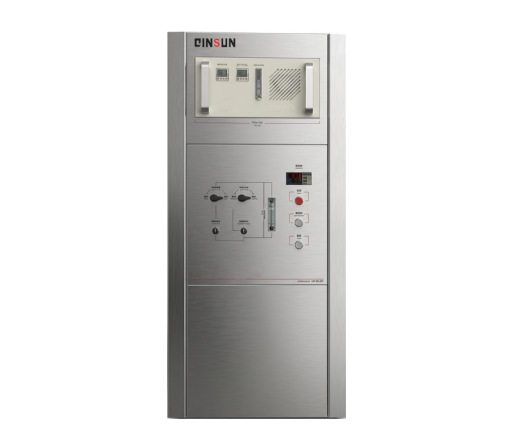


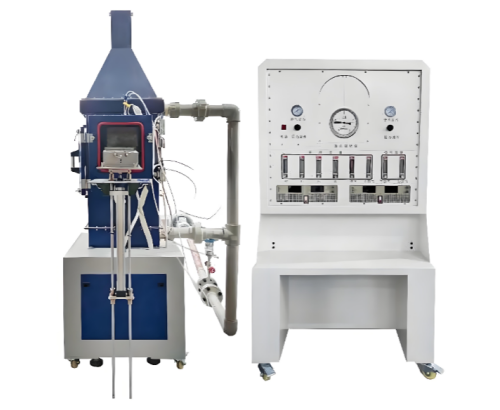
FTIR Fourier infrared smoke toxicity tester is equipped with a 5 m optical path multi-reflection gas cell, fully integrated into a 19-inch standard industrial cabinet. It is highly suitable for industrial gas measurement and analysis, and also applicable for fully automatic real-time monitoring and quantitative analysis of gases in other application fields. Its stable and durable core components, such as interferometer, infrared light source, and diode laser, greatly improve long-term operation capability and reduce overall operation and maintenance costs.
The FTIR Fourier infrared gas analysis system can be applied in various scenarios. It can be combined with an NBS smoke density chamber for toxicity index testing, used together with lithium battery performance test systems for battery performance testing, and also applied in gas composition analysis and scientific research in other industries.
Standards
DIN 5510-2 (Smoke toxicity of railway vehicle materials)
ISO 19702
ISO 5659-2
EN 45545-2
Parameters
Equipment size: 650(L)×675(W)×1750(H) mm
Weight: 200 kg
Power supply: AC220V 2KW 50HZ
Spectral range: 500–5000 cm⁻¹.
Spectral resolution: better than 1 cm⁻¹ (optional 2 cm⁻¹, 4 cm⁻¹, 8 cm⁻¹ via software).
Spectral repeatability: <0.1 cm⁻¹.
Error range: ≤ ±2% of calibrated range; repeatability: ≤ ±2%
Response time: T90 < 120 s
Optical path length: 5 m (customizable)
Heating: Heating system with temperature controller, up to 200°C
Equipped with a dedicated sampling probe for pipeline or sealed chamber sampling
The sampling system is fully thermostatically controlled and equipped with a dedicated filter capable of filtering particles larger than 2 μm
Quantitative models available for multiple gases such as H₂O, CO₂, CO, NO₂, NO, N₂O, NH, SO₂, HF, O₂, etc. The system provides modeling software for user-defined models. The infrared gas analyzer also supports qualitative analysis, with more than 5000 reference spectra available.
Features
Compact structure, easy to integrate into industrial on-line analysis systems.
Advanced cube corner mirror interferometer design with permanently aligned optical path and excellent stability.
Gas cells with different optical paths can be configured according to actual concentration requirements to meet various measurement needs.
Optical path purging can be implemented according to on-site environmental conditions.
Capable of simultaneous multi-component gas analysis with real-time monitoring of concentration changes.
Interferometer: High-stability cube corner Michelson interferometer suitable for industrial environments.
FAQ
1.What is an FTIR Fourier Infrared Smoke Toxicity Test Device?
An FTIR Fourier Infrared Smoke Toxicity Test Device is an advanced analytical tool used to measure the toxicity of smoke produced by burning materials. It utilizes Fourier Transform Infrared Spectroscopy (FTIR) to identify and quantify organic and inorganic gases in smoke, providing essential data for fire safety and material compliance testing.
2.How does the FTIR device operate?
The FTIR device operates by passing infrared light through a sample of smoke captured in a chamber. As the light interacts with the molecules in the smoke, it is absorbed at specific wavelengths, producing a spectrum that identifies the chemical composition of the smoke. This data can then be analyzed to assess potential hazards.
3.What are the applications of smoke toxicity testing?
Smoke toxicity testing using FTIR devices is essential in various fields including fire safety, material testing, aerospace, automotive, and building materials. It helps in evaluating the toxicological impact of combustion products, ensuring regulatory compliance, and improving safety protocols during fire incidents.
4.Why is it important to test smoke toxicity?
Testing smoke toxicity is crucial for ensuring the safety of materials used in construction and manufacturing. Understanding the toxic components of smoke can help in assessing risks to health and safety, particularly in scenarios like fire outbreaks, where inhalation of toxic gases can lead to severe consequences.
5.What standards are associated with smoke toxicity testing?
Smoke toxicity testing is governed by various industry standards and regulations, including ASTM E662, ISO 5659, and NFPA guidelines. These standards provide frameworks for conducting assessments and establishing safety thresholds for smoke produced by various materials.
6.What are the benefits of using an FTIR smoke toxicity test device?
Using an FTIR smoke toxicity test device offers numerous benefits including high sensitivity, rapid analysis, and comprehensive data on smoke composition. This device enables manufacturers and safety professionals to make informed decisions regarding material safety and to enhance fire response strategies based on detailed toxicological insights.
Leave Message Get Price