Building Material Smoke Density Tester


Application
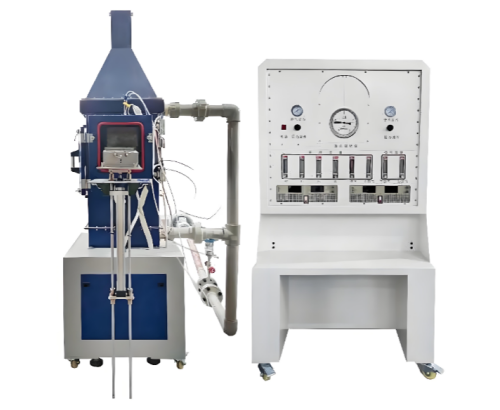
The Building Material Smoke Density Tester is used to measure the static smoke density of building materials under combustion or decomposition conditions. The principle is based on direct flame exposure to the sample. Smoke generated by the burning material reduces the light transmittance inside the test chamber. The loss of light flux is used to determine the smoke density rating (SDR).
This equipment is primarily used for measuring the static smoke production of building materials and products, as well as automotive interior materials.
Standards
ASTM D2843 – Standard Test Method for Smoke Density of Materials
GB/T 8627 – Test Method for Smoke Density of Building Materials under Combustion or Decomposition
Product Parameters
Item | Specification |
Combustion Chamber | 755 (W) × 320 (D) × 850 (H) mm |
Control Box | 650 (W) × 675 (D) × 1200 (H) mm |
Power Supply | AC 220V, 50/60Hz, 3A |
Weight | Approx. 100 kg |
Gas Source (User-supplied) | Propane ≥ 85% purity, compressed air |
Features
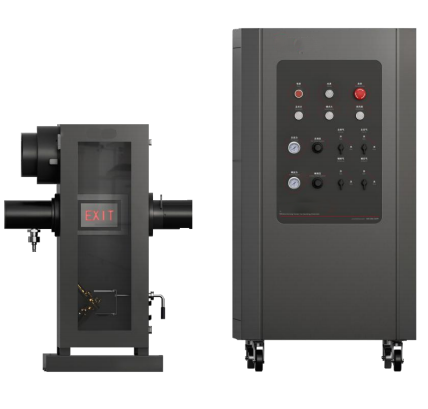
(1) Split design: Independent control box reduces heat impact on components, improving lifespan.
(2) Transparent tempered glass door: For easy observation of the test; door equipped with latch for sealing.
(3) EXIT signage: White background with red letters on the back of the smoke chamber, backlit for visibility during testing.
(4) Main and auxiliary burners: Brass construction, nozzle diameter 0.13 mm, with mixing device to ensure complete fuel-air combustion.
(5) Dual gas supply system: Equipped with solenoid valves, pressure regulators, and gauges to ensure stable combustion.
(6) Compressed air supply: Adjustable via imported rotor flow meter.
(7) High-voltage pulse automatic ignition: Stable, reliable, and safe.
(8) Sample holder: Stainless steel wire mesh and conical collection pan for secondary combustion of drips. Long service life.
(9) Automated sample positioning: Push-rod mechanism delivers the sample to the flame after stabilization; flip mechanism deposits residuals into water tray for extinguishing.
(10) Optical system: Imported lamp and reflector convert light into a parallel beam through the chamber.
(11) Signal conversion: Silicon photodetector and grating convert light changes into electrical signals.
(12) Calibration: Standard optical filters ensure optical path accuracy.
(13) Computer & software control: Guided operation for safe and convenient testing.
(14) Data management: Automatically collects, calculates, stores, and outputs reports; displays real-time data, smoke density curves, historical curves, and query functions.
FAQ
1.What is a Building Material Smoke Density Tester?
A Building Material Smoke Density Tester is a specialized instrument used to measure the smoke density produced by materials when they are subjected to combustion. This test is critical in assessing the fire safety of building materials, as it helps determine how much smoke will be generated in the event of a fire, influencing visibility and inhalation hazards.
2.Why is smoke density testing important for building materials?
Smoke density testing is essential as it helps ensure compliance with fire safety regulations and standards. It provides valuable information on the potential hazards associated with smoke in a fire situation. Building materials that produce excessive smoke can pose serious risks by reducing visibility and increasing toxicity, making it difficult for occupants to escape.
3.How is smoke density measured in these tests?
Smoke density is typically measured using a photometric method, where the intensity of light passing through the smoke is compared before and after combustion. The results are often presented in terms of smoke density index values, which help in evaluating the material's performance against established safety standards.
4.What standards are used for smoke density testing?
Smoke density testing for building materials is often governed by various national and international standards, including ASTM E662 in the United States and ISO 5659 internationally. These standards provide guidelines on test methodologies and performance criteria to ensure a consistent and reliable evaluation of smoke generation.
5.Who should conduct smoke density testing?
Smoke density testing should be conducted by certified professionals who are trained in handling testing equipment and interpreting results. This may include environmental testing labs or specialized fire safety organizations that can ensure compliance with relevant codes and provide accurate assessments.
6.What types of materials can be tested using a smoke density tester?
Various building materials can be tested for smoke density, including plastics, insulation materials, textiles, and coatings. These tests help manufacturers and builders select materials that meet safety standards, ensuring that the products used in construction contribute to a safer environment for occupants.
Leave Message Get Price