Room Corner Fire Test Apparatus
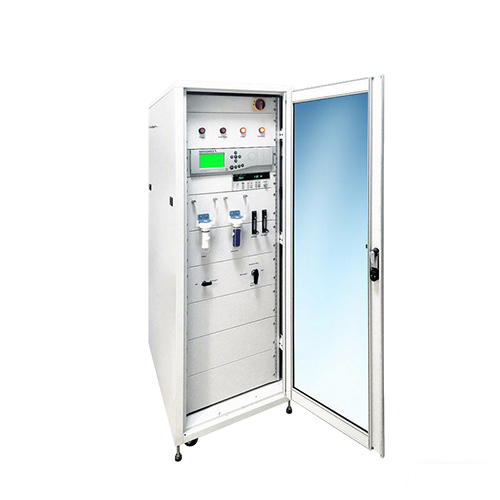


The Room Corner Fire Test Apparatus is a full-scale fire testing system based on the oxygen consumption principle and designed in accordance with GB/T 25207 and ISO 9705. You use this apparatus to simulate a real room corner fire scenario and evaluate the combustion behavior of surface materials under realistic installation conditions. It is widely recognized as one of the most reliable methods for large-scale fire performance assessment when small-scale tests are insufficient.
Application
You can use the system to evaluate fire behavior of materials in realistic room fire conditions, including:
(1) Building interior wall and ceiling materials
(2) Decorative surface materials and composite panels
(3) Insulation materials and sandwich panels
(4) Polymer-based construction materials
(5) Furniture surface materials
(6) Cable coverings and interior finishing products
It is suitable for fire research institutes, building material manufacturers, quality inspection bodies, and university laboratories.
Standards
The apparatus complies with the following standards:
(1) GB/T 25207-2010 (Fire test — Full-scale room test for surface products)
(2) ISO 9705 (Fire tests — Full-scale room test for surface products)
Parameters
| Parameter Category | Specification |
|---|---|
| Combustion Room Size | 2.4 m (L) × 3.6 m (H) × 2.4 m (W) |
| Smoke Hood Size | 3 m (W) × 3 m (D) × 1 m (H) |
| Exhaust Duct Diameter | 400 mm |
| Minimum Exhaust Duct Length | ≥ 5000 mm |
| Exhaust Velocity | ≥ 3.5 m/s |
| Burner Fuel | Propane |
| Burner Output | 100 kW (first 10 min), up to 300 kW |
| Load Cell Range | 0–5 kg |
| Load Cell Accuracy | ≤ 0.1 g |
| Mass Flow Controller Range | 0–7 g/s |
| Sampling Pump Flow | ≥ 13 L/min |
| Optical Measurement Range | 400–750 nm |
| Power Supply | 220 V, 10 A; 380 V, 5 kW |
| Equipment Weight | ~700 kg |
Features
(1) Complete integrated system including combustion room, gas analysis, smoke collection, and gas supply modules
(2) Conical smoke collection hood with built-in smoke mixing structure for accurate measurement
(3) Stainless steel exhaust system with high-temperature resistance ≥300 °C
(4) Variable-frequency centrifugal exhaust fan with continuously adjustable airflow
(5) Precision weighing system for mass loss measurement
(6) Advanced gas sampling and conditioning unit ensuring reliable data
(7) Paramagnetic O₂ analyzer and IR CO₂ analyzer with fast response
(8) High-accuracy smoke density optical measurement system
(9) UV flame monitoring and flame-out protection for safe operation
(10) Professional data acquisition software with automatic recording every 3 seconds
(11) Multiple built-in calibration interfaces for reliable system verification
Accessories
(1) Conical smoke collection hood
(2) Sand box propane burner
(3) Gas sampling and conditioning system
(4) O₂ paramagnetic analyzer
(5) CO₂ infrared analyzer
(6) Smoke density measurement system
(7) Data acquisition and analysis software
(8) Computer and printer
(9) Calibration interfaces and tools
Test Procedures
(1) Install the specimen in the combustion room according to actual end-use conditions.
(2) Check gas supply, exhaust system, and analyzers.
(3) Start the software and perform required calibrations.
(4) Ignite the propane burner and maintain 100 kW for the first 10 minutes.
(5) If flashover does not occur, increase burner output to 300 kW and continue for 10 minutes.
(6) Monitor heat release, smoke production, and gas data during the test.
(7) Stop the test when flashover occurs or when the 20-minute test period ends.
(8) Export and analyze the test results.
Maintenance Information
(1) Regularly check and clean the exhaust duct and smoke hood.
(2) Calibrate O₂ and CO₂ analyzers periodically using standard gases.
(3) Inspect the propane supply system for leakage before each test.
(4) Replace filters in the sampling system as required.
(5) Verify load cell accuracy at scheduled intervals.
(6) Keep optical components clean to ensure smoke measurement accuracy.
(7) Ensure the laboratory ventilation system remains adequate.
FAQ
(1) What is this product?
It is a full-scale room fire testing system used to evaluate the combustion behavior of surface materials under simulated room corner fire conditions.
(2) What is this product used for?
You use it to measure heat release, smoke production, and fire growth characteristics of building and decorative materials.
(3) What is the working principle of this product?
The system operates based on the oxygen consumption calorimetry principle, calculating heat release by measuring oxygen depletion in the exhaust gases during combustion.
(4) Why is this product important?
It provides realistic large-scale fire performance data that small-scale tests cannot accurately predict, supporting fire safety design and material certification.
(5) What industries is this product suitable for?
It is suitable for construction materials, fire research institutes, universities, quality inspection agencies, and manufacturers of interior finishing products.
Leave Message Get Price