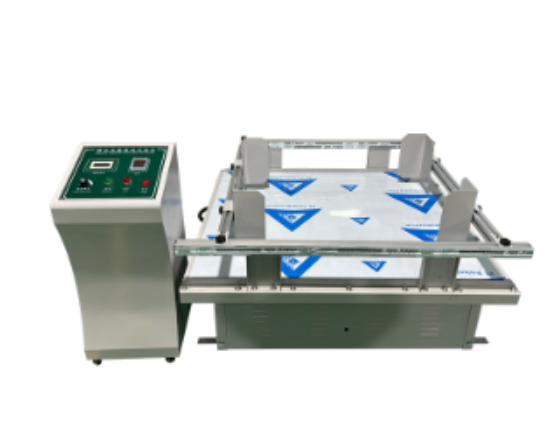
ASTM E84 Building Materials Flame Spread Test Apparatus
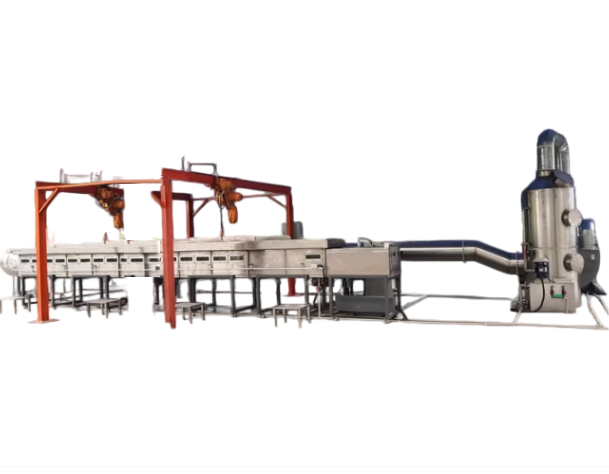


The ASTM E84 Building Materials Flame Spread Test Apparatus is designed to evaluate the combustion performance of flooring, ceiling, wall coverings, as well as insulation and thermal materials. You can accurately measure the Flame Spread Index (FSI) and Smoke Developed Index (SDI), allowing you to assess the fire safety of materials in real-world applications. This instrument provides reliable data to support building material safety design and compliance.
Application
Interior and exterior building materials: Testing flame spread performance of floors, walls, and ceilings.
Insulation and thermal materials: Fire performance evaluation of polyurethane, mineral wool, glass wool, and other insulation products.
Furniture and composite panels: Fire resistance testing for plywood, upholstered furniture, and other wood or composite materials.
Other interior materials: Fire testing of coatings, wallpapers, and decorative panels.
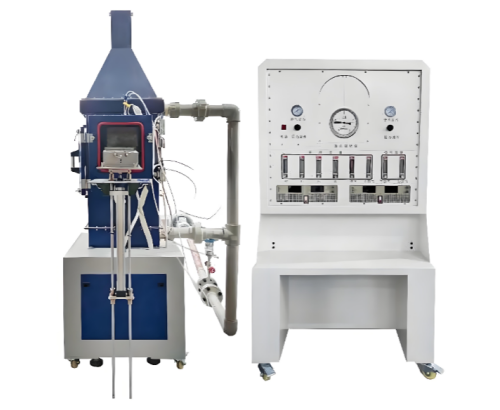
Compatible test products: Tunnel furnace, dual-head flame nozzle, smoke collection system.
Standards
This test apparatus conforms to the following international standards:
ASTM E84 — Standard Test Method for Surface Burning Characteristics of Building Materials
NFPA 255 — Standard Method of Test of Surface Burning Characteristics of Building Materials
UL 723 — Standard for Test for Surface Burning Characteristics of Building Materials
ISO 5660 — Fire Testing — Heat Release and Flame Spread Measurements
Parameters
| Parameter | Specification |
|---|---|
| Test Method | ASTM E84 / NFPA 255 / UL 723 |
| Flame Source | Dual-head nozzle of tunnel furnace |
| Test Duration | 10 minutes |
| Measured Indicators | Flame Spread Index (FSI), Smoke Developed Index (SDI) |
| FSI Classification | Class A: 0–25Class B: 26–75Class C: 76–200 |
| SDI Range | 0–450 |
| Applicable Materials | Wood, composite panels, decorative materials, insulation/thermal materials |
Features
Accurate Measurement: Quantifies fire performance through FSI and SDI values.
Multi-Standard Compliance: Supports ASTM, UL, NFPA, and other international standards.
Safe and Reliable: Controlled testing process ensures stable and repeatable data.
Easy Operation: Simple sample installation and test procedure suitable for routine lab use.
Wide Applicability: Covers interior and exterior decoration, insulation materials, and furniture panels.
Accessories
Tunnel furnace main unit
Dual-head flame nozzle
Sample mounting fixtures
Smoke collection and analysis system
Data acquisition and recording system
Test Procedures
Mount the test sample on the sample rack at the top of the tunnel furnace.
Start the tunnel furnace; flames are emitted from the dual-head nozzle onto the sample.
Conduct the test for 10 minutes, recording flame spread and smoke development.
Calculate the Flame Spread Index (FSI) based on flame propagation distance and time.
Measure the Smoke Developed Index (SDI) and classify the material according to ASTM E84 standards.
Maintenance Information
Regularly clean the flame nozzles and furnace to remove carbon deposits for uniform flame distribution.
Calibrate smoke collection devices and sensors quarterly to ensure accurate measurements.
Keep sample fixtures and supports intact to prevent deformation affecting results.
Turn off power and ventilate the lab after use to prevent smoke residue from damaging equipment.
FAQ
1. What is this product?
It is a testing apparatus for evaluating the surface burning characteristics of building materials, quantifying flame spread and smoke development.
2. What is it used for?
You can assess fire safety levels of materials, guide material selection for buildings, and ensure compliance with fire regulations.
3. How does it work?
Flames from a dual-head nozzle in the tunnel furnace act on the sample surface, while flame spread and smoke development are recorded. FSI and SDI values are then calculated.
4. Why is it important?
FSI and SDI values directly relate to material fire safety. Low FSI materials are required in high-rise buildings and public spaces to reduce fire hazards.
5. Which industries is it suitable for?
Construction decoration, insulation and thermal materials manufacturing, furniture production, interior and exterior wall panel production, and any industry requiring fire performance certification.
Leave Message Get Price