Asphalt Saybolt Viscometer
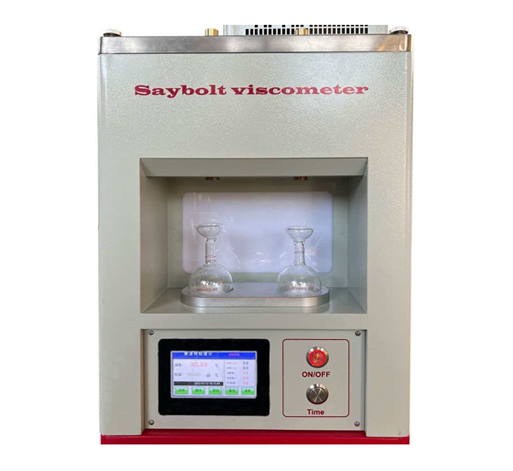


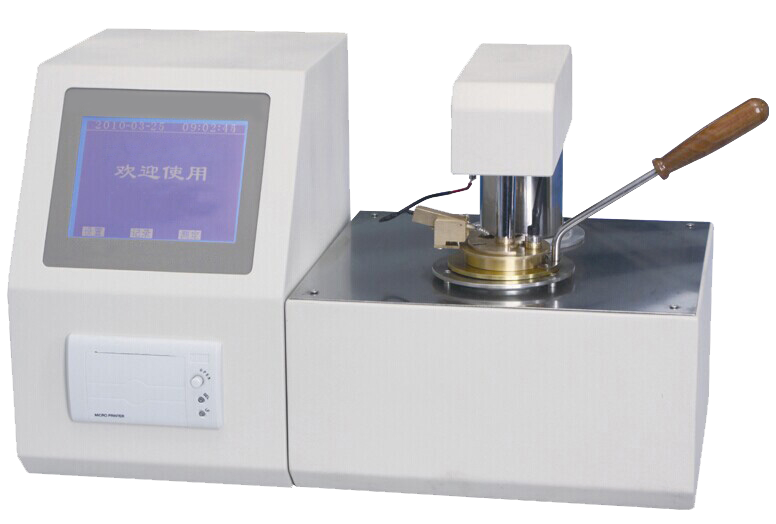
The Asphalt Saybolt Viscometer is used to determine the Saybolt viscosity of viscous petroleum asphalt, emulsified asphalt, and liquid asphalt. It is suitable for evaluating construction temperatures and flow characteristics at elevated temperatures (typically 120–180 °C).
The instrument features precise temperature control (±0.1 °C) and a 7-liter heat-transfer oil bath system to ensure stable and uniform heating. It complies with JTG 3410-2025 (T0623-2005) requirements and is suitable for laboratory and field quality control applications.
Application
(1) Determination of Saybolt viscosity of viscous petroleum asphalt
(2) Testing of emulsified asphalt and liquid petroleum asphalt
(3) Evaluation of asphalt construction temperature
(4) Quality control in highway engineering laboratories
(5) Research and material performance evaluation
Under normal conditions, the test temperature for viscous petroleum asphalt ranges from 120 °C to 180 °C.
Standards
(1) JTG 3410-2025 — Standard Test Methods of Asphalt and Asphalt Mixture for Highway Engineering
(2) T0623-2005 — Asphalt Saybolt Viscosity Test
Parameters
| Technical Parameter | Specification |
|---|---|
| Power Supply | 220 V ±10%, 50 Hz |
| Power | 650 W |
| Temperature Control Range | Room temperature to 240 °C |
| Temperature Accuracy | ±0.1 °C |
| Heat Transfer Oil Capacity | Approx. 7 L |
| Heating Tank Dimensions | 250 × 200 × 145 mm |
| Overall Dimensions | 380 × 350 × 610 mm |
Features
(1) High-precision temperature control (±0.1 °C)
(2) Uniform heating with large-capacity oil bath system
(3) Suitable for high-temperature asphalt viscosity testing
(4) Complete accessory configuration for standard-compliant testing
(5) Stable structure for laboratory and field use
Accessories
(1) Sample container with 3.15 mm flow nozzle (2 pcs)
(2) Sample container lid (2 pcs)
(3) Receiving bottle, 60 mL (2 pcs)
(4) Rod thermometers (0–50 °C, 50–100 °C)
(5) Fuse (2 pcs)
(6) Power cord (1 pc)
(7) User manual (1 set)
(8) Certificate (1 pc)
Test Procedures
Preparation
(1) Clean and dry the sample container and flow hole with solvent (e.g., xylene).
(2) Prepare approximately 450 g of asphalt sample. Heat slowly with continuous stirring; stirring must not stop within the last 30 °C of heating.
(3) Heat to 10–15 °C above the specified test temperature. Each sample shall be heated only once.
(4) Place the viscometer on a level surface. Connect the sensor and stirrer.
(5) Add approximately 7 L of heat-transfer oil.
(6) Set the test temperature and start heating.
(7) When temperature approaches 10 °C below set value, start stirring. Maintain required temperature.
Test Procedure
(1) Insert cork into the bottom cavity (6.5–9.5 mm depth).
(2) Position receiving bottle centrally under flow hole.
(3) Sieve sample through 0.15 mm mesh and fill to marked line. Cover container.
(4) Stir horizontally at 30–50 r/min until sample reaches specified temperature ±0.1 °C; maintain for 1 minute.
(5) Remove thermometer and lid. Pull out cork and start stopwatch simultaneously.
(6) Stop timing when liquid reaches 60 mL mark. Record to 0.1 s accuracy.
Calculations
Saybolt viscosity:
Vs = V1 × F
Where:
Vs — Saybolt viscosity (s)
V1 — Measured flow time (s)
F — Calibration factor
Kinematic viscosity of petroleum asphalt:
ηs = 2.12 × V
Where:
ηs — Kinematic viscosity (mm²/s)
Engler degree of emulsified asphalt:
Ev = 0.280 × Vs
Where:
Ev — Engler degree
Maintenance Information
(1) Ensure proper grounding and correct power supply voltage before use.
(2) Place instrument in dry, ventilated environment.
(3) Confirm no water is present in insulation tank before high-temperature testing.
(4) Maintain oil level approximately 5 cm below tank cover.
(5) Do not start stirring motor during initial heating stage.
(6) Regularly inspect oil-resistant seals at sample tube joints.
(7) Drain heat-transfer oil only after temperature has sufficiently decreased.
FAQ
1. What is this product?
It is a laboratory instrument used to determine the Saybolt viscosity of asphalt materials under controlled high-temperature conditions.
2. What is this product used for?
It is used to evaluate the flow characteristics and construction temperature of petroleum asphalt and emulsified asphalt.
3. Why is this product important?
Accurate viscosity measurement ensures proper mixing, pumping, and paving performance in highway engineering.
4. What industries is this product suitable for?
Highway engineering laboratories, asphalt production plants, construction companies, research institutions, and quality inspection agencies.
5. What types of this product are available?
Standard laboratory models for high-temperature petroleum asphalt testing and configurations suitable for emulsified asphalt evaluation.
Leave Message Get Price