Nonwoven Fabric Compressive Water Absorption Tester
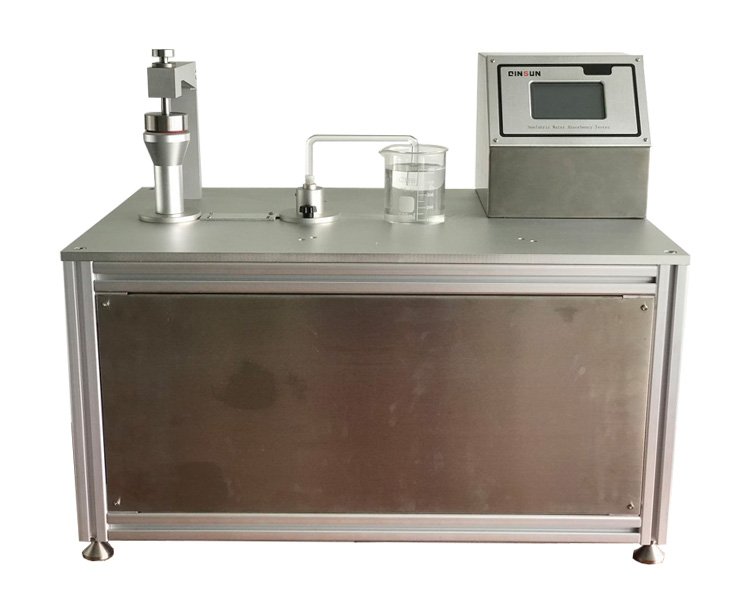


The Nonwoven Fabric Compressive Water Absorption Tester is designed to evaluate the liquid absorption performance of nonwoven fabrics under controlled compression. The instrument allows precise comparison of different nonwoven materials’ water absorption properties, without simulating final product usage conditions. It provides highly reproducible and accurate results for research, quality control, and material development.
Applications
(1) Comparison of water absorption performance of nonwoven fabrics.
(2) Material development and quality assessment for hygiene products, medical fabrics, filters, and industrial textiles.
(3) Laboratory testing of nonwoven sheets under controlled pressure conditions.
(4) Evaluation of absorbent capacity for disposable products like wipes, pads, or filters.
(5) R&D in textiles and nonwoven material manufacturing to optimize absorbency properties.
Standards
(1) GB/T 24218.12-2012 – Determination of compressive water absorption of nonwoven fabrics.
(2) Applicable ISO and ASTM equivalents may be referenced for comparative testing.
Parameters
| Parameter | Specification |
|---|---|
| Sample Diameter | 55 ± 1 mm |
| Number of Samples | 5 pieces per test |
| Water Column Height | 40 ± 0.5 mm above liquid reservoir |
| Maximum Absorption Mass (Af) | Mass of liquid absorbed at equilibrium, g |
| Compressive Absorption (DAC) | Af divided by sample mass, g/g·s |
| Maximum Absorption Rate (MAR) | Maximum mass change per unit time, g/s |
| Pressure Application | Cylindrical weight with replaceable hydrophobic foam pad |
| Test Temperature | Room temperature (ambient) |
| Data Acquisition | Digital display with automatic storage |
| Calibration | Multi-porous plate flow rate calibration and electronic balance calibration |
Features
(1) Measures liquid absorption under controlled compressive pressure, providing reproducible and accurate data.
(2) Allows automatic recording of maximum absorption mass, compressive absorption, and maximum absorption rate.
(3) Equipped with hydrophobic foam pads for repeated tests and easy replacement.
(4) Digital interface for setting sample ID, mass, absorption type (standard or high absorption), and automatic data storage.
(5) Multi-porous plate design with precise liquid flow control (2.5–3.5 g/s).
(6) Supports frequent calibration to maintain accuracy, including electronic balance and multi-porous plate calibration.
(7) User-friendly software with step-by-step prompts for testing and calibration.
Accessories
(1) Hydrophobic foam pads (replaceable)
(2) Cylindrical compression weights
(3) Multi-porous glass plate and U-shaped tube
(4) Plastic sample holder/clip for controlled water delivery
(5) Digital electronic balance (integrated or external)
(6) Calibration kit for plate flow rate
(7) User manual
Test Procedures
Affix the hydrophobic foam pad to the weight using double-sided adhesive.
Prepare 5 samples from the same material, 55 ± 1 mm in diameter, pre-conditioned as required.
Fill the reservoir and U-shaped tube with water; ensure liquid surface is 40 ± 0.5 mm above reservoir.
Place the sample on the multi-porous glass plate and cover with cylindrical weight.
Power on the instrument and select interface language.
Enter sample ID, mass, and absorption type.
Start the test; the system records data automatically.
Upon test completion, save the data and view results via the display.
Calibrate the instrument every two days, including multi-porous plate flow rate and electronic balance calibration.
Multi-porous plate calibration: deliver 11 mL of deionized water and verify flow rate (2.5–3.5 g/s).
Electronic balance calibration: follow on-screen prompts to complete.
Maintenance Information
(1) Clean the multi-porous plate and U-shaped tube after each test to avoid residue buildup.
(2) Regularly inspect foam pads and replace when worn.
(3) Keep water reservoir clean and free of contamination.
(4) Perform calibration as recommended (every two days or before repeated tests).
(5) Avoid exposing electronic components to excessive moisture or liquids.
FAQ
(1) What does the Nonwoven Fabric Compressive Water Absorption Tester measure?
The instrument measures the amount and rate of liquid absorbed by nonwoven fabrics under controlled compression conditions. It evaluates parameters such as maximum absorption mass, compressive absorption, and absorption rate for material performance comparison.
(2) Which nonwoven products can be tested with this instrument?
The tester is suitable for nonwoven materials used in diapers, sanitary products, wipes, medical fabrics, filters, and industrial absorbent products. It helps manufacturers compare different materials and optimize product design.
(3) Why is compression applied during water absorption testing?
Compression provides a controlled testing condition to evaluate how nonwoven materials absorb liquid when subjected to external pressure. This helps compare absorbency differences between materials under standardized laboratory conditions.
(4) Which standard is used for compressive water absorption testing?
The instrument complies with GB/T 24218.12-2012, which specifies the test method for determining compressive water absorption of nonwoven fabrics. Other ISO and ASTM methods may be referenced for comparative research.
(5) How can I select the right nonwoven absorption tester for my application?
Selection should consider material type, testing purpose, required standards, and evaluation parameters. QINSUN instruments are calibrated and tested before shipment to ensure data accuracy. For customized testing solutions, technical support, and application cases, please contact engineers for professional guidance.
Leave Message Get Price