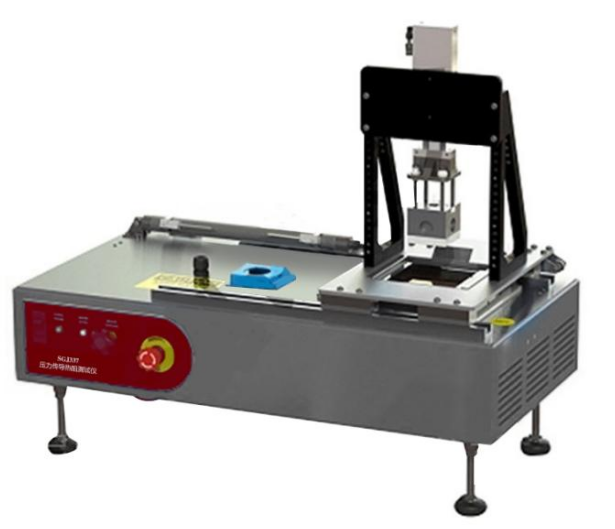
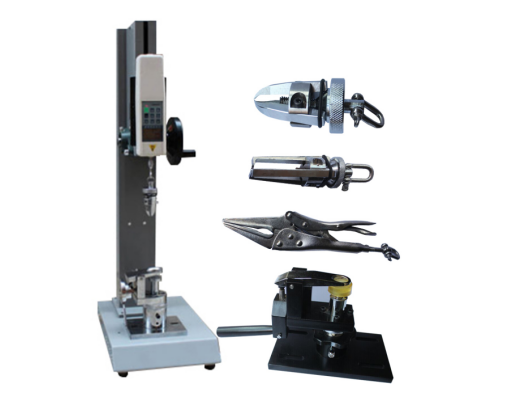
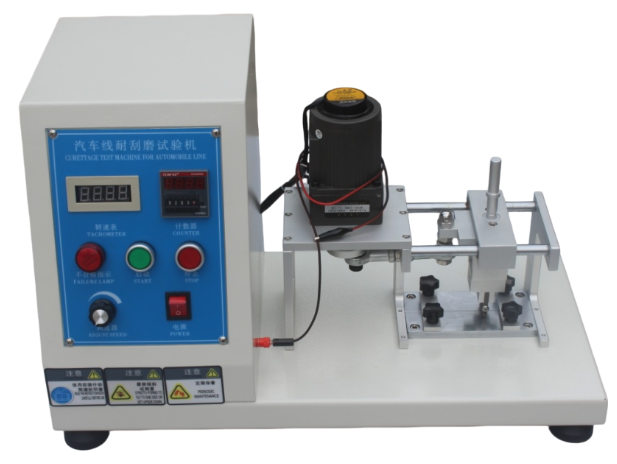
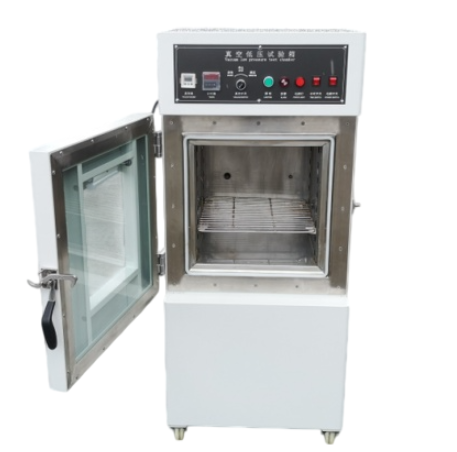
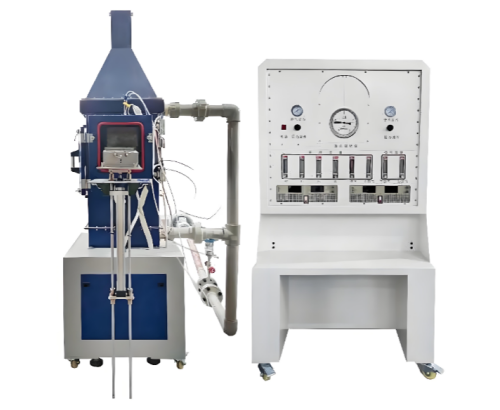
Automotive Seat Seatbelt Anchorage Strength Tester
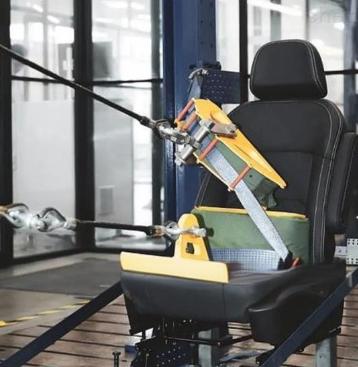


Automotive Seat Seatbelt Anchorage Strength Test System is designed to evaluate the strength, deformation behavior, and structural integrity of seatbelt anchorage points installed on automotive seats. The system applies controlled static tensile loads to simulate real restraint forces during vehicle operation and crash conditions, helping manufacturers verify seat structures, belt anchorages, and fixing components according to safety regulations. It is widely used for vehicle safety certification, seat development, and quality inspection.
Application
(1) Strength testing of seatbelt anchorage points on automotive seats.
(2) Verification testing of seat structures integrated with seatbelt anchorages.
(3) Compliance testing for ISOFIX and top tether anchorage systems.
(4) Type approval and homologation testing for passenger vehicles and buses.
(5) Product validation during seat design and development.
(6) Testing after design modifications, material changes, or process changes.
(7) Quality inspection and conformity assessment for seat manufacturers and suppliers.
Standards
(1) GB 14167-2013: Safety-Belt Anchorage Points, ISOFIX Anchorages Systems and Top Tether Anchorages
(2) GB 15083-2006: Strength Requirements and Test Methods for Automobile Seats, Seat Anchorages and Head Restraints
(3) GB 13057-2003: Strength of Bus Seats and Their Vehicle Anchorages
(4) ECE R14: Uniform Provisions Concerning the Approval of Vehicles with Regard to Safety-Belt Anchorages
(5) FMVSS 207: Seating Systems
(6) FMVSS 210: Seat Belt Assembly Anchorages
(7) FMVSS 225: Child Restraint Anchorage Systems (ISOFIX / LATCH)
Parameters
| Parameter | Unit | Value |
|---|---|---|
| Load capacity of force sensor | N | 30,000 |
| Actuator stroke | mm | 1000 |
| Loading speed range | – | Adjustable |
| Time to reach specified load | s | 2 … 60 |
| Speed accuracy | – | 0.5% FS |
| Horizontal adjustment range per actuator | mm | ±850 |
| Horizontal angle adjustment | ° | −5 … +5 |
| Vertical angle adjustment | ° | Upward (10° ± 15°) |
| Rated output (load cell) | mV/V | 3 ± 0.025% |
| Non-linearity | % FS | 0.05 |
| Non-repeatability | % FS | 0.02 |
| Hysteresis | % FS | ±0.05 |
| Displacement sensor stroke | mm | 1200 |
| Deformation measurement accuracy | mm | 0.01 |
| Displacement linear accuracy | % FS | 0.05 |
| Displacement repeatability | % | 0.01 |
| Effective sampling frequency | Hz | Initial 10,000 |
Features
(1) Designed specifically for seatbelt anchorage and seat structure strength testing.
(2) Electro-hydraulic servo loading with precise force and displacement control.
(3) Flexible beam and actuator adjustment to accommodate different seat geometries.
(4) High-precision force and deformation measurement for compliance evaluation.
(5) Wide compatibility with passenger vehicle and bus seat configurations.
(6) High sampling frequency for accurate capture of load–deformation behavior.
(7) Robust frame structure ensuring stable and repeatable test conditions.
Accessories
(1) High-capacity load cells
(2) Electro-hydraulic servo cylinders
(3) Displacement and deformation sensors
(4) Adjustable seat mounting fixtures
(5) Hydraulic power unit
(6) Data acquisition and control software
Maintenance Information
(1) Periodic calibration of load cells and displacement sensors.
(2) Regular inspection of hydraulic cylinders, hoses, and connectors.
(3) Verification of control accuracy and safety interlock functions.
(4) Routine maintenance of hydraulic oil and filtration system.
(5) Maintenance records and calibration documentation should be retained.
FAQ
1. What is this product?
It is a test system used to evaluate the strength and deformation of automotive seatbelt anchorage points.
2. What is it used for?
It is used to verify compliance of seatbelt anchorages and seat structures with safety regulations.
3. Why is this product important?
Seatbelt anchorage strength is critical to occupant protection during collisions and is mandatory for vehicle certification.
4. Which industries is it suitable for?
Automotive OEMs, seat manufacturers, Tier 1 suppliers, testing laboratories, and vehicle certification bodies.
5. What are similar products?
Seat structural strength test rigs, seat anchorage test systems, and ISOFIX anchorage strength test benches.
6. Can this system test ISOFIX anchorage
points?
Yes. The system supports testing of
ISOFIX and top tether anchorage systems according to GB 14167-2013 and FMVSS 225
requirements for child restraint safety evaluation.
7. How should a seatbelt anchorage test system be
selected?
Selection should consider
required load capacity, test standards, actuator adjustment range, and
measurement accuracy. QINSUN engineers can provide suitable configuration
recommendations based on your testing requirements.
Leave Message Get Price