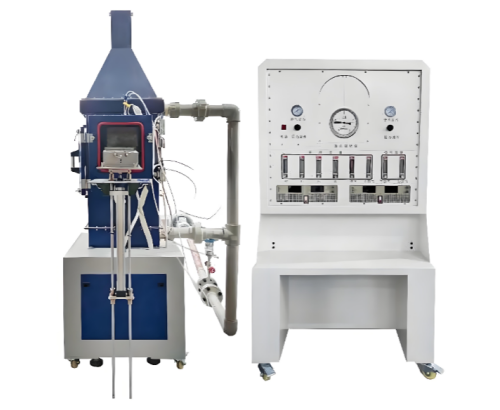
Automotive Connector Insertion and Withdrawal Force Tester
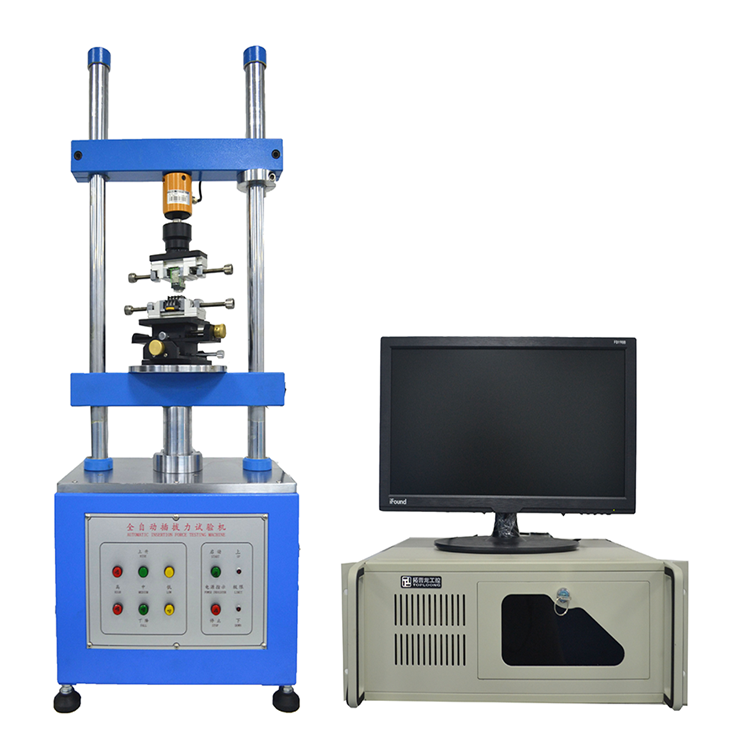


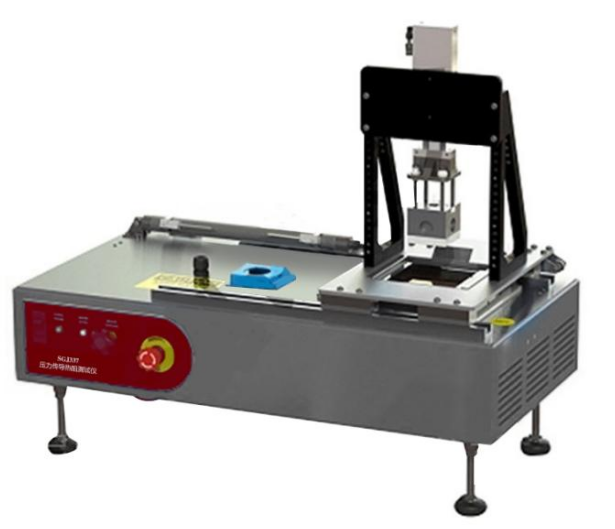
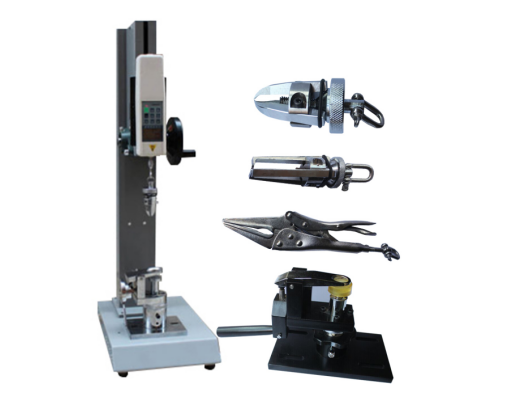
The Automotive Connector Insertion and Withdrawal Force Tester is a precision testing instrument designed to measure insertion force, withdrawal force, and force–displacement characteristics of automotive electrical connectors. Through controlled speed, displacement, and load measurement, the system provides accurate evaluation of connector assembly performance, retention capability, and durability. It is widely used in automotive electronics development, connector quality control, and reliability testing.
Application
(1) Insertion force testing of automotive electrical connectors (wire-to-board, wire-to-wire, board-to-board).
(2) Withdrawal force testing for connector retention performance evaluation.
(3) Repeated insertion/withdrawal cycle testing for durability and life assessment.
(4) Incoming inspection and final quality control of connector assemblies.
(5) R&D verification of connector structural design and contact performance.
(6) Testing of automotive products including ECU connectors, sensor connectors, power connectors, and harness connectors.
Standards
(1) USCAR-2: Performance Specification for Automotive Electrical Connector Systems
(2) USCAR-20: Electrical Connector Performance Test Specification
(3) IEC 60512: Connectors for Electronic Equipment – Tests and Measurements
(4) IEC 61984: Connectors – Safety Requirements and Tests
(5) ISO 8092: Road Vehicles — Connections for On-board Electrical Wiring Harnesses
(6) LV214 (Volkswagen Group Electrical Connector Standard)
Parameters
| Parameter | Unit | Value |
|---|---|---|
| Load cell capacity | kg | 5 / 10 / 20 / 50 (selectable) |
| Force resolution | – | 0.01 |
| Maximum test height | mm | 150 |
| Displacement resolution | mm | 0.01 (optional 0.001) |
| Test speed range | mm/min | 0 – 200 |
| XY axis travel range | mm | 0 – 75 |
| Transmission system | – | Precision ball screw |
| Drive system | – | Servo motor |
| Control system | – | Industrial PC with test software |
Features
(1) Continuous force–displacement curve acquisition with real-time display.
(2) Accurate peak force detection for insertion and withdrawal processes.
(3) Stable and repeatable motion control using servo motor and ball screw.
(4) Adjustable speed, stroke, and test cycles for flexible test configuration.
(5) Integrated XY positioning stage for precise specimen alignment.
(6) Automated data storage, analysis, and test report generation.
Accessories
(1) Industrial PC and control software
(2) 17-inch LCD monitor
(3) Printer for test reports
(4) Large XY moving stage
(5) Self-centering fixture for multi-pin connectors
(6) Multi-purpose connector fixtures
(7) Interchangeable clamping jaws
Test Procedures
(1) Mount the connector specimen securely using the appropriate fixture.
(2) Adjust the XY stage to align the connector insertion axis accurately.
(3) Select the load cell and configure test parameters (speed, stroke, cycles).
(4) Start the test to perform insertion or withdrawal movement.
(5) Record force–displacement curves and peak force values automatically.
(6) Save test data and generate test reports upon completion.
Maintenance Information
(1) Regularly inspect and clean fixtures and clamping components.
(2) Calibrate the load cell periodically to ensure measurement accuracy.
(3) Check ball screw lubrication and servo motor operation at scheduled intervals.
(4) Verify software functionality and data backup regularly.
(5) Store the equipment in a clean, dry environment when not in use.
FAQ
(1) What does an Automotive Connector Insertion and Withdrawal Force Tester measure?
It measures the force required to insert and remove automotive connectors, helping evaluate connection reliability, assembly performance, and retention strength.
(2) Which connectors can be tested with this instrument?
It is suitable for automotive electrical connectors such as ECU connectors, sensor connectors, power connectors, and wiring harness connectors.
(3) Why is insertion and withdrawal force testing important?
Proper force values ensure connectors can be assembled easily while maintaining stable electrical contact and preventing connection failure during vehicle operation.
(4) Which standards are commonly used for connector testing?
Common standards include USCAR-2, USCAR-20, IEC 60512, IEC 61984, ISO 8092, and LV214 connector performance requirements.
(5) How to choose a suitable connector force tester?
Selection depends on connector type, expected force range, test cycle requirements, and applicable standards. QINSUN engineers can recommend a suitable solution based on your testing needs. Contact us for professional support.
Leave Message Get Price