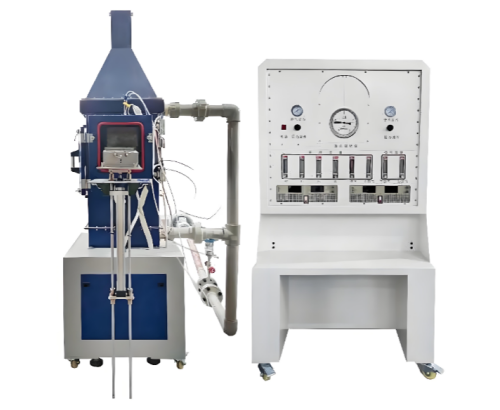
Curtain Wall Performance Test System
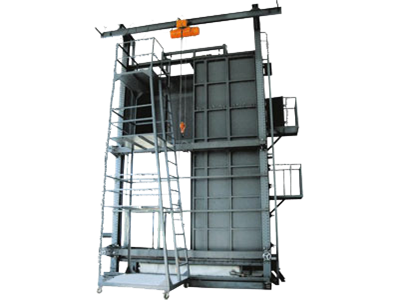


The Curtain Wall Performance Test System is designed for grading and testing the air permeability, water tightness, wind load resistance, and in-plane deformation performance of building curtain wall systems. Developed to address limitations found in existing market equipment, this system integrates optimized control, measurement, and data acquisition for the three key performance parameters. The software is updated in accordance with the latest curtain wall standards, ensuring accurate, stable, and fully automated testing essential for product certification, quality control, and engineering validation.
Applications
The system is suitable for comprehensive performance evaluation of a wide range of curtain wall structures and materials, including:
(1) Panel-type curtain walls
(2) Point-supported curtain wall systems
(3) Unitized curtain wall systems
(4) Stick-built (component-type) curtain walls
(5) All-glass curtain wall systems
(6) Aluminum alloy curtain walls
(7) Steel-framed curtain walls
(8) Glass, stone, metal panel, and composite curtain wall assemblies
(9) Full-scale façade mock-ups for laboratory certification testing
Standards
(1) GB/T 15227-2007 — Test Methods for Air Permeability, Water Tightness and Wind Load Resistance of Building Curtain Walls
(2) GB/T 21086-2007 — Building Curtain Walls
(3) GB/T 18250-2015 — Test Method for In-Plane Deformation Performance of Building Curtain Walls
(4) EN 12152 — Curtain Walling — Air Permeability — Performance Requirements and Classification
(5) EN 12153 — Curtain Walling — Air Permeability — Test Method
(6) EN 12154 — Curtain Walling — Water Tightness — Performance Requirements and Classification
(7) EN 12155 — Curtain Walling — Water Tightness — Test Method
(8) EN 13126 / EN 13116 — Curtain Walling — Resistance to Wind Load — Performance Requirements and Test Method
(9) ASTM E283 — Standard Test Method for Determining Rate of Air Leakage Through Exterior Windows, Curtain Walls, and Doors
(10) ASTM E331 — Standard Test Method for Water Penetration of Exterior Windows, Skylights, Doors, and Curtain Walls by Uniform Static Air Pressure Difference
(11) ASTM E547 / ASTM E331M — Cyclic Static Air Pressure Water Penetration Test of Curtain Wall Systems
(12) ASTM E330 / ASTM E330M — Structural Performance of Exterior Windows, Doors, Skylights, and Curtain Walls by Uniform Static Air Pressure Difference
(13) ISO 9972 — Thermal Performance of Buildings — Determination of Air Permeability of Building Envelopes (airflow control reference)
(14) ISO 15927-3 — Hygrothermal Performance of Buildings — Calculation and Presentation of Climatic Data — Wind-Driven Rain (water tightness reference)
Technical Parameters
| Parameter | Specification |
|---|---|
| Control Console (Type A) | 600 mm × 600 mm × 1850 mm |
| Static Pressure Chamber | 5000 mm × 2000 mm × 8000 mm |
| Optional Curtain Wall Width Range | 35–45; 50–80; 60–90; 100–160; 120–160 |
| Power Supply | AC 380 V, 25 kW, three-phase five-wire |
| Wind Pressure Test Range | −7 kPa to +7 kPa |
| Air Flow Measurement Range | 0–500 m³/h |
| Water Spray Rate Range | 0–5 L/m²·min |
| In-Plane Deformation Range | 0–50 mm |
| Pressure Transmitter Accuracy | Class 0.25 / Class 0.5 |
| Air Flow Meter Accuracy | 3% |
| Displacement Sensor Accuracy | 0.2% |
| Optional Displacement Range | −50 mm to +50 mm |
Features
(1) Three-range micro-pressure sensors for air permeability, water tightness, and wind load resistance testing
(2) Wind pressure controlled by frequency inverter and hydraulic pressure system to ensure stable and rapid pressure regulation
(3) Fully digital data acquisition with key sensors using imported components
(4) Imported high-precision air velocity sensors enabling positive and negative air flow measurement
(5) Motor-driven four-way valve for automatic pressure direction switching
(6) In-plane deformation controlled by hydraulic power station or electric actuator
(7) Adjustable spray system to meet different regional water tightness requirements
(8) Dual-circuit main control piping for air flow testing, significantly improving accuracy and repeatability of air permeability tests
(9) High level of automation with computer-controlled test execution, automatic data acquisition, processing, and report generation
(10) Variable frequency drive technology enabling stepless pressure control, energy saving, noise reduction, pulse loading, and fluctuating pressure testing
(11) Human–machine interface supporting interactive operation and fast fluctuating pressure loading via pressure fluctuation valve
(12) High-strength main structural frame with corrosion-resistant spray system components
(13) Single fixture setup for air, water, wind pressure, and in-plane deformation tests, reducing setup labor and improving test efficiency
The Curtain Wall Performance Test System provides a reliable solution for evaluating the environmental and structural performance of modern curtain wall systems. With integrated air leakage, water penetration, wind pressure, and deformation testing capabilities, it helps manufacturers, laboratories, and engineering organizations verify product quality, improve façade design, and meet international performance requirements.
FAQ
(1) What performance tests can be completed with this system?
This system can evaluate key curtain wall properties including air permeability, water tightness, wind load resistance, and in-plane deformation performance. These tests help verify whether curtain wall assemblies meet design requirements and applicable building standards before installation.
(2) What types of curtain walls can be tested?
The system is suitable for various curtain wall structures, including unitized, stick-built, glass, aluminum alloy, steel-framed, and composite façade systems. The configuration can be adjusted according to specimen size and laboratory testing requirements.
(3) How does the system evaluate water tightness?
During testing, the specimen is exposed to controlled water spray while maintaining a specified pressure difference. Engineers observe water penetration behavior and determine whether the curtain wall meets the required water resistance classification.
(4) Why is wind load resistance testing important for curtain walls?
Wind pressure testing simulates environmental loads experienced during building operation. It helps evaluate structural stability, deformation behavior, and safety margins of curtain wall systems under positive and negative pressure conditions.
(5) How should laboratories choose a suitable curtain wall test system?
Selection should consider specimen dimensions, required test standards, pressure range, measurement accuracy, and future testing needs. For specific configuration recommendations, you can consult QINSUN engineers.
Leave Message Get Price