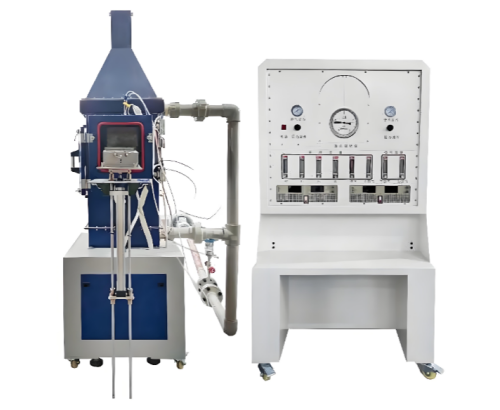
Smoke Toxicity Test Apparatus (NES 713)
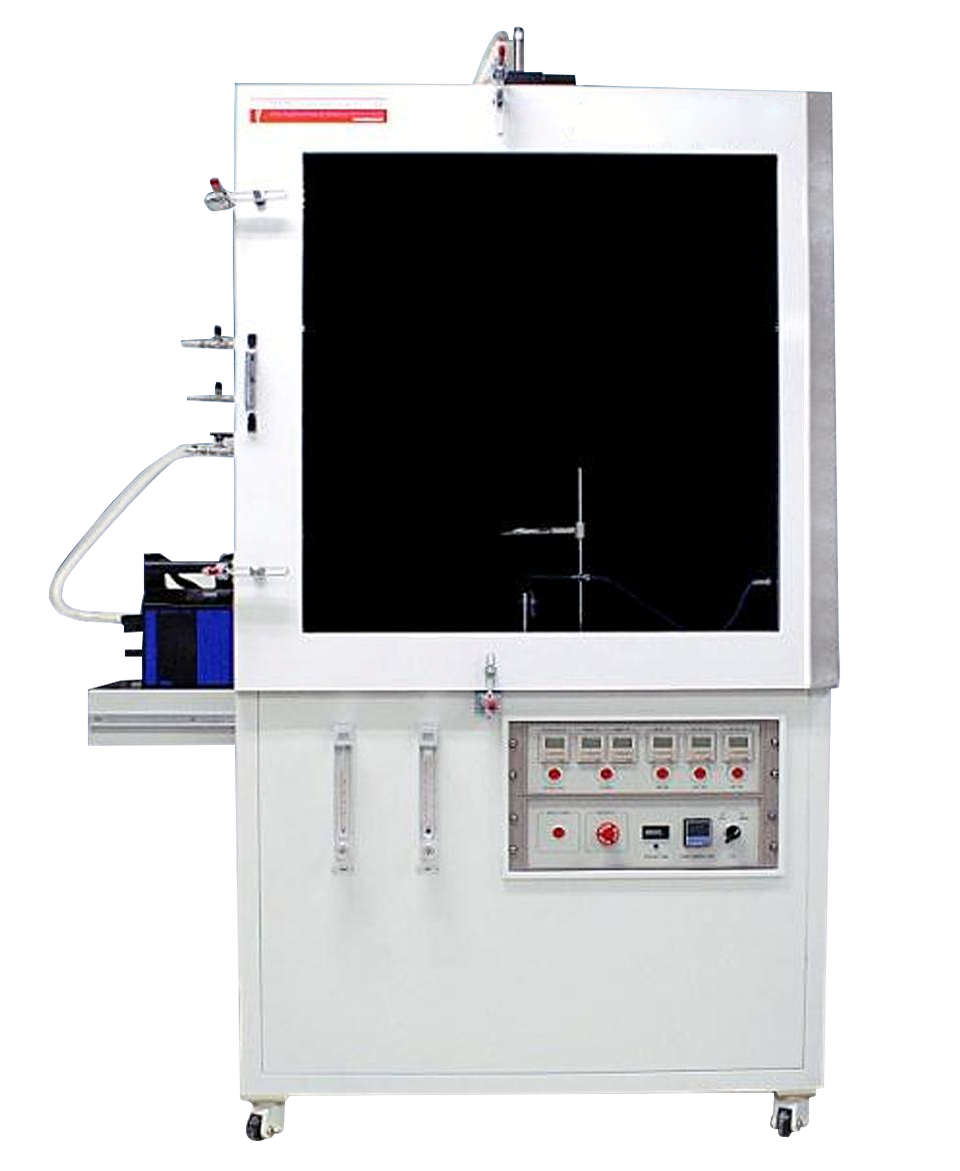


The Smoke Toxicity Test Apparatus is designed to evaluate the toxicity of gases released during the combustion of cable materials in accordance with NES standards.
In NES regulations, toxicity refers to the property of combustion gases that cause structural damage or functional disorder to living organisms. The toxicity index represents the combined toxic effect of all gases generated during material combustion.
Application
This instrument is used to assess the combustion characteristics and smoke toxicity of materials. It is suitable for use with colorimetric detector tubes or portable flue gas analyzers to measure smoke toxicity after combustion, and is widely applied in cable fire safety testing and material evaluation.
(1) Cable industry — testing cable insulation, sheathing materials, and electrical components for toxic gas release during fire conditions.
(2) Polymer materials — evaluating plastic materials and polymer products used in transportation, construction, and industrial applications.
(3) Railway and marine industries — assessing fire safety performance of materials used in enclosed environments.
(4) Defense and aerospace-related applications — supporting material selection where smoke toxicity control is required.
(5) Material research laboratories — studying combustion characteristics and toxic gas generation of new materials.
(6) Fire safety evaluation institutions — performing standardized smoke toxicity testing for product development and compliance assessment.
Standards
(1)NES 713 – Determination of the Toxicity Index of Products of Combustion from Small Specimens of Materials
Technical Parameters
| Item | Specification |
|---|---|
| Internal Volume | 0.7 m³ |
| Chamber Material | Stainless steel |
| Inner Wall Material | Fire-resistant polypropylene |
| Number of Specimen Positions | 15 |
| Ignition System | Spark ignition with automatic re-ignition |
| Test Modes | Manual / Automatic |
| Dimensions (W × D × H) | 1,185 × 700 × 2,100 mm |
| Power Supply | AC 220V, 50/60 Hz, 10 A |
| Weight | Approx. 150 kg |
| Exhaust Capacity | 50 L/s |
| Fuel Gas | Methane (standard), Propane (optional) |
| Accessories | Compressed gas, vacuum cleaner |
| User Manual | Available |
Features
(1)Stainless steel chamber construction with fire-resistant polypropylene inner walls, seamless welding, and an internal volume of 0.7 m³.
(2)Transparent polycarbonate chamber door with reinforced lamination, providing high strength and easy internal cleaning.
(3)Gas burner equipped with a spark ignition system, capable of automatic re-ignition if the flame is extinguished.
(4)Timer-controlled operation with automatic ignition and automatic flame shut-off after ignition is completed.
(5)Equipped with 15 specimen positions, suitable for use with gas colorimetric detector tubes or other gas analyzers.
(6)Independent control cabinet with built-in flowmeter, timer, methane control, and air control system.
(7)Powerful exhaust system, automatically activated by the timer to remove smoke generated during testing.
(8)Built-in circulation fan to ensure rapid and uniform mixing of combustion gases.
(9)Observation window made of reinforced plastic allows real-time monitoring of the combustion process.
(10)Door locking mechanism for convenient and secure opening and closing of the chamber.
(11)Manual and automatic test modes available for flexible operation.
(12)Automatic circulation mode, with combustion gases circulated under timer control during the test period.
FAQ
(1)What is this product?
The Smoke Toxicity Test Apparatus is a fire testing instrument used to determine the toxicity of gases released during material combustion in accordance with NES 713.
(2)What is the main purpose of this test?
It evaluates the combined toxic effect of combustion gases by calculating the toxicity index, which is critical for assessing fire safety performance of cable and polymer materials.
(3)Which materials can be tested?
It is mainly used for cable materials, insulation materials, polymers, and other products where smoke toxicity during combustion is a safety concern.
(4)What measurement methods are supported?
The system is compatible with colorimetric detector tubes and portable flue gas analyzers for post-combustion gas analysis.
(5)Is the operation automatic?
Yes. The apparatus supports both manual and automatic modes, including automatic ignition, timing control, gas circulation, and exhaust after testing.
(6)Why is NES 713 testing important?
NES 713 testing is widely required in railway, marine, defense, and cable industries to ensure that materials do not release highly toxic gases during a fire, thereby improving occupant safety and regulatory compliance.
(7) How is smoke toxicity analyzed during the test?
After combustion, the generated gases are collected and analyzed using colorimetric detector tubes or portable flue gas analyzers to determine the toxic gas concentration.
(8) How to choose the right configuration for smoke toxicity testing?
Selection depends on tested materials, analysis methods, and testing requirements. QINSUN engineers can recommend a suitable solution based on your application. Contact us for professional support.
Leave Message Get Price