6 Station Pilling Tester
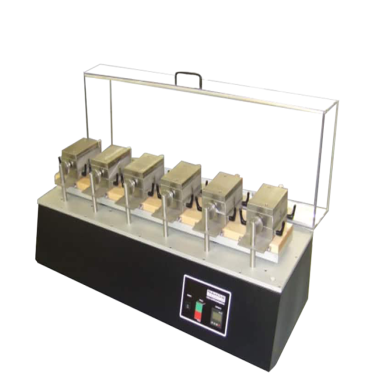


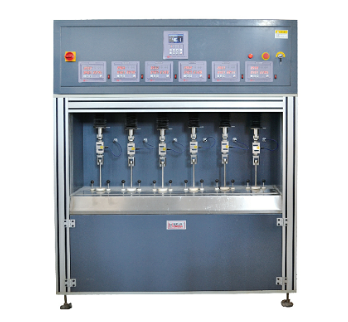
The 6 Station Pilling Tester is a textile testing instrument designed to evaluate the pilling resistance and surface abrasion performance of fabrics, woven materials, and leather products. By applying controlled friction between specimens and selected abradants, the tester simulates wear conditions that may occur during actual use and helps determine the tendency of materials to develop pills, fuzz, or surface damage. With six independent testing stations and programmable operation control, it is suitable for textile manufacturers, material research laboratories, and quality inspection organizations requiring efficient and repeatable pilling evaluation.
Application
Test specimens are rubbed against known abradants—such as nylon brushes, sponges, or Velcro—for a set number of cycles to determine the material’s tendency to form pills or surface fuzz. The results can be compared against industry standards or customized in-house criteria.
The tester is compatible with Standard Test Kits, which can be configured with different abradants, test materials, and test weights for flexibility in testing protocols.
Typical applications include:
(1) Textile Fabric Quality Testing
Used to evaluate pilling behavior of woven and knitted fabrics during product development and quality inspection.
(2) Automotive Interior Material Evaluation
Applied for testing textile and upholstery materials used in vehicle interiors according to automotive supplier requirements.
(3) Leather and Synthetic Material Testing
Used to evaluate abrasion resistance and surface appearance changes of leather and similar materials.
(4) Research and Development
Provides comparative test data for studying the influence of fibers, yarn structures, finishing processes, and material formulations on pilling performance.
(5) Production Quality Control
Helps manufacturers monitor product consistency and verify whether materials meet internal or industry requirements.
Test Standards
| Standard / Reference | Description |
|---|---|
| ASTM D3511 | Standard test method for pilling of textiles |
| Ford BN 108-03, BN 108-14, BN 125-01 | Ford motor vehicle textile and material pilling standards |
| GM 9652 | General Motors textile and material pilling standard |
| TPJLR.52.005 | Jaguar Land Rover textile pilling specification |
Technical Specifications
| Feature | Specification |
|---|---|
| Number of Stations | 6 |
| Construction | Non-corrosive aluminum and solid stainless steel |
| Finish | Durable powder coat and anodized finishes |
| Bearings | Precision ball and needle bearings |
| Controller | Programmable count-up controller with automatic stop |
| Speed / Jog Control | Adjustable test speed and jog controls |
| Safety | Vented protective cover to protect operator hands from pinch points |
| Electrical | Supply voltages vary; specified at time of purchase |
| Drive System | High quality brushless electric motors |
Features
Multi-station design – Allows simultaneous testing of up to six specimens for efficiency.
Versatile abradant compatibility – Works with nylon brushes, sponges, Velcro, or other materials as required.
Programmable operation – Automatic stop and count-up controller ensure repeatable and accurate testing.
Durable and precise – Built with aluminum, stainless steel, and precision bearings for long-term reliability.
Safety-oriented – Protective covers minimize risk of operator injury.
Flexible configuration – Compatible with standard or custom test kits for diverse testing protocols.
FAQ
(1) What factors should customers consider when selecting a 6 Station Pilling Tester?
We recommend that customers consider the required testing standards, material types, number of specimens, abrasion method, and laboratory workload when selecting a 6 Station Pilling Tester. Different industries may require different abradants and evaluation procedures.
(2) What materials can be tested with this pilling tester?
We design this tester for evaluating pilling and surface abrasion performance of various materials, including woven fabrics, knitted fabrics, automotive textiles, leather, and synthetic materials. The suitable test method depends on the material type and the requirements of the applicable standard.
(3) How does the 6 Station Pilling Tester evaluate fabric pilling performance?
We use controlled friction between the specimen and selected abradants to simulate wear conditions. During testing, materials are subjected to repeated rubbing cycles, and the resulting pills, fuzz formation, or surface changes can be evaluated according to the selected testing standard.
(4) Why is a multi-station pilling tester useful for textile laboratories?
We develop the six-station design to allow multiple specimens to be tested under the same operating conditions, which improves testing efficiency and supports comparative evaluation. It is especially useful for laboratories performing frequent fabric quality inspections or material development testing.
(5) How can customers confirm whether this tester meets their testing requirements?
We suggest customers confirm the required standards, tested materials, abrasion accessories, and laboratory application before purchasing. Our QINSUN engineers can provide more detailed technical information and help customers verify whether the equipment parameters meet their testing requirements.
Leave Message Get Price