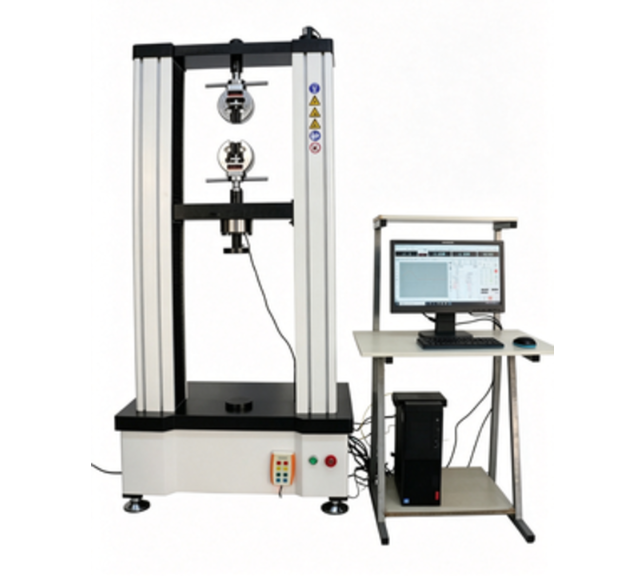
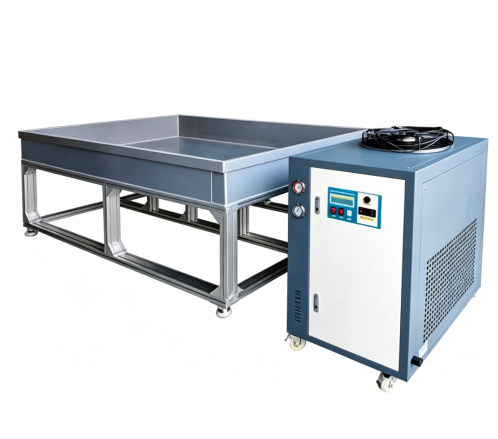
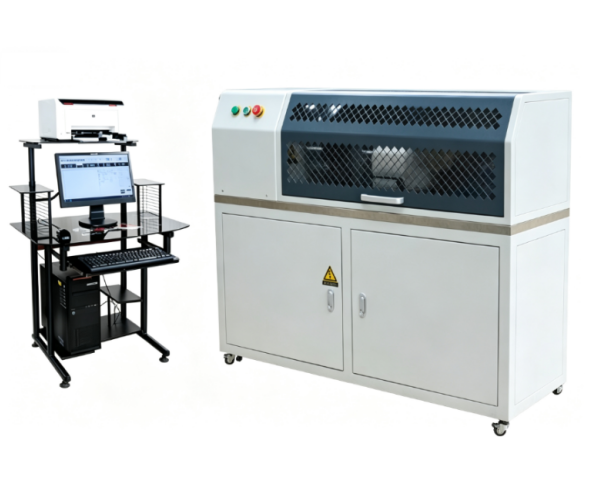
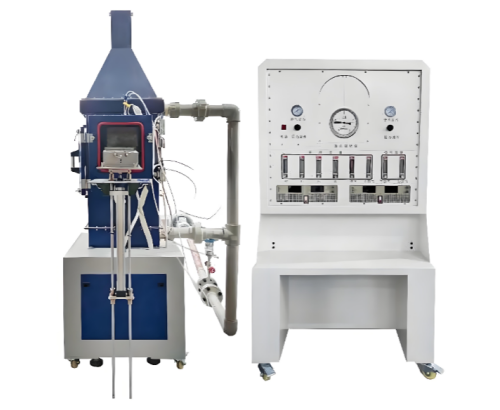
Suture Needle Penetration and Bending Strength Tester
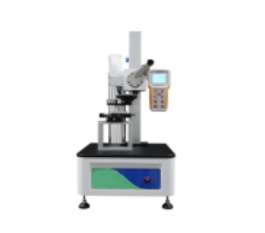


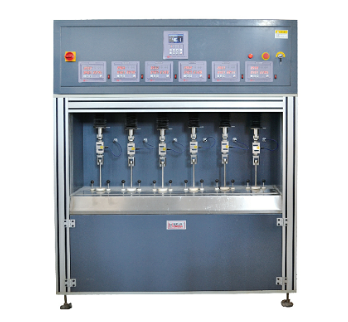
The Suture Needle Puncture and Bending Strength Tester has broad application prospects and significant application value in the medical device industry. The following is a detailed introduction to its main uses, compliance standards, and technical parameters:
Application
Quality Control for Manufacturing Enterprises: During the production of suture needles, the tester can conduct sampling tests on each batch of suture needles, promptly identifying quality issues in the production process, such as unstable raw material quality or defects in processing techniques. This enables timely adjustment of the production process to ensure the stability and consistency of product quality. Selecting Appropriate Suture Needles for Medical Institutions: Medical institutions can use the tester to conduct performance tests on different types of suture needles, and based on the test results, select the suture needles that best meet the surgical needs of patients, thereby improving surgical effectiveness and patient safety. Product R & D and Optimization: R & D personnel in the medical device field can use the tester to evaluate the performance of the design of new - type suture needles. By testing the strength and puncture force of suture needles with different structures, materials, and dimensions, they can optimize the design of suture needles and develop products with better performance.
Standards
The Suture Needle Puncture and Bending Strength Tester complies with relevant standards such as ASTM F3014 - 2014 and ASTM F1874 - 98.
- ASTM F3014 - 2014: Specifies the specific methods and procedures for the penetration test of surgical suture needles, aiming to evaluate the penetration performance of suture needles to ensure they can meet requirements in actual use.
- ASTM F1874 - 98: Specifies the specific methods and procedures for the bending test of surgical suture needles, aiming to evaluate the strength and durability of suture needles under bending conditions.
Technical Parameters
| Item | Specification |
|---|---|
| Testing Items | Puncture force, bending strength |
| Force Range | 0–50 N (customizable) |
| Stations | Multi-station (e.g., 12 stations) |
| Accuracy | ≤0.01 N or ±0.1% FS |
| Test Speed | 10–305 mm/min (adjustable) |
| Loading Rate | ≤10 mm/s |
| Needle Fixture | Dedicated clamping fixture |
| Bending Speed | 4°±2°/s |
| Power Supply | 220 V, 50 Hz (or local standard) |
Features
(1) High-precision force measurement with stable and repeatable results
(2) Multi-station design improves testing efficiency
(3) Adjustable test speed to meet different standard requirements
(4) Dedicated fixtures ensure accurate positioning and clamping
(5) Suitable for both production inspection and research applications
FAQ
1.What is this product?
It is a testing instrument used to measure the puncture force and bending strength of surgical suture needles.
2.What is this product used for?
It is used for quality control, product selection, and research and development in the medical device industry.
3.What is the working principle of this product?
The instrument applies controlled force or bending motion to a suture needle and measures the resulting mechanical response using a high-precision sensor.
4.Why is this product important?
It ensures the reliability and safety of suture needles used in surgical procedures by verifying their mechanical performance.
5.What industries is this product suitable for?
It is suitable for medical device manufacturers, testing laboratories, and healthcare institutions.
6.What is a Suture Needle Penetration and Bending Strength Tester used for?
A Suture Needle Penetration and Bending Strength Tester is used to evaluate the mechanical performance of surgical suture needles by measuring penetration force and bending strength. The equipment helps manufacturers verify whether surgical needles can achieve effective tissue penetration while maintaining sufficient mechanical strength during use. It is commonly used in surgical needle manufacturing, medical device quality control, and laboratory performance evaluation.
7.How is suture needle penetration force tested?
A Suture Needle Penetration Force Tester measures the force required for a surgical needle to penetrate a specified test medium under controlled conditions. During the test, the needle is fixed on a suitable fixture and driven through the test material while the system records the penetration force. The test results help manufacturers evaluate needle sharpness, tip design, and production consistency.
8.Why is bending strength testing important for surgical needles?
A Surgical Needle Bending Strength Tester is used to evaluate the resistance of a needle against bending deformation under applied force. During surgical procedures, needles may experience stress when passing through tissue. Insufficient bending strength may affect handling performance. Testing helps manufacturers verify needle rigidity, structural reliability, and consistency between different production batches.
9.What factors affect the performance of surgical suture needles?
The performance of surgical suture needles can be affected by factors such as needle material, tip geometry, grinding process, surface treatment, needle diameter, and manufacturing consistency. The Suture Needle Tester provides measurable data to evaluate these factors, helping manufacturers identify process variations and improve needle design and production control.
10.What types of needles can be tested with a Surgical Needle Tester?
A Surgical Needle Tester is commonly used for evaluating different types of medical suture needles, including curved needles, straight needles, and disposable surgical needles. The applicable needle types depend on the fixture design and testing method. Before testing, manufacturers usually confirm the needle size, structure, and required performance criteria to ensure accurate evaluation.
11.Which standards are related to suture needle testing?
Suture needle testing requirements depend on the needle type, application, and regulatory requirements of the target market. Standards such as ASTM F1840 provide terminology related to surgical needles, while manufacturers may also refer to applicable medical device quality requirements such as ISO 13485 during production control. Specific penetration force and bending strength test methods are usually defined according to product specifications and customer requirements.
12.How does a Suture Needle Penetration and Bending Strength Tester help medical device manufacturers?
A Suture Needle Penetration and Bending Strength Tester provides objective test data for quality inspection and product development. Manufacturers can use the results to compare different needle designs, monitor production stability, and identify changes caused by materials or manufacturing processes. This helps maintain consistent performance of surgical needles before they are supplied to medical users.
13.How should manufacturers choose a Suture Needle Testing Machine?
When selecting a Suture Needle Testing Machine, manufacturers should consider the needle types being tested, required test methods, fixture compatibility, measurement accuracy, and repeatability. A suitable tester should match the company's actual quality control requirements and testing procedures. For medical device manufacturers, reliable test data and compatibility with their products are usually more important than simply comparing equipment specifications.
Leave Message Get Price