Torque - to - Failure Tester for Metal Bone - connecting Screws



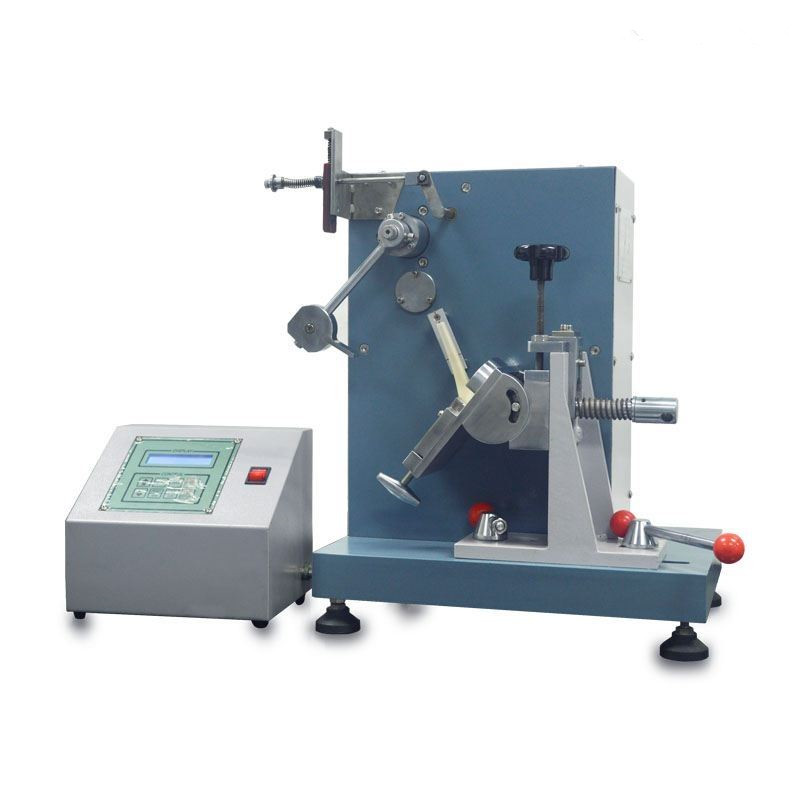
The Torque-to-Failure Tester for Metal Bone-Connecting Screws is designed to evaluate the torsional strength and mechanical failure characteristics of metallic bone screws used in orthopedic implants. By applying controlled rotational force to a screw, the tester measures the torque required to cause yielding or fracture and can record the breaking angle.
The test results help assess the mechanical properties of bone screws, compare different materials and designs, and support product development and manufacturing quality control. The testing system can incorporate a torque sensing system, force sensor, angle sensor, and appropriate clamping fixtures to evaluate screw performance under specified test conditions.
Application
(1) Metallic bone screws for orthopedic implants
(2) Bone screw torsional strength testing
(3) Maximum torque and breaking angle measurement
(4) Torsional yield strength evaluation
(5) Bone screw material comparison
(6) Implant screw design optimization
(7) Medical implant research and development
(8) Orthopedic implant manufacturing quality control
Standards
(1) ASTM F543-23 — Standard Specification and Test Methods for Metallic Medical Bone Screws
(2) ISO 6475:1989 — Implants for Surgery — Metal Bone Screws with Asymmetrical Thread and Spherical Under-Surface — Mechanical Requirements and Test Methods
Parameters
| Parameter | Specification |
|---|---|
| Force Measurement Range | Model-dependent; some configurations measure forces in the tens-of-newtons range |
| Force Measurement Accuracy | Model-dependent; 0.1 N or finer is cited for some configurations |
| Test Speed | Adjustable; some configurations support 0–500 mm/min |
| Main Components | Testing unit, angle sensor, torque sensing system, force sensor, and roller clamping device |
Features
(1) Measures maximum torque and torsional yield strength.
(2) Records breaking angle during torsional failure testing.
(3) Evaluates deformation and fracture behavior of metallic bone screws.
(4) Supports comparison of different screw materials and designs.
(5) Uses torque, force, and angle measurement components.
(6) Supports implant development and manufacturing quality control.
Leave Message Get Price