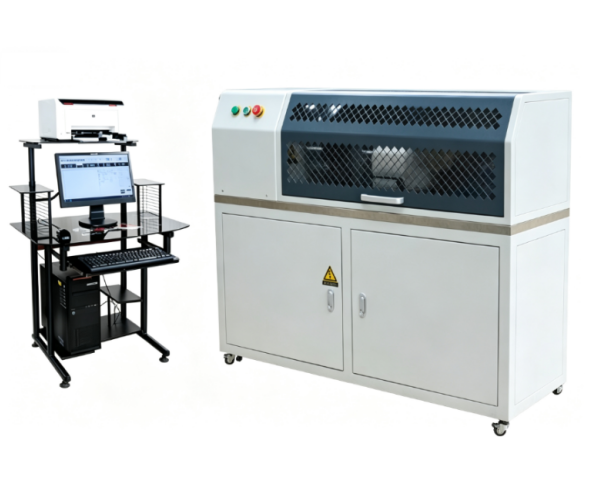
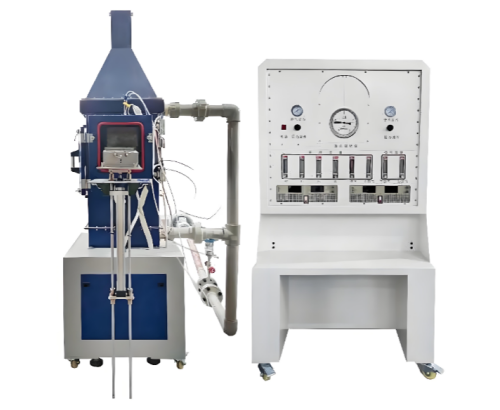
Battery Short-Circuit Tester
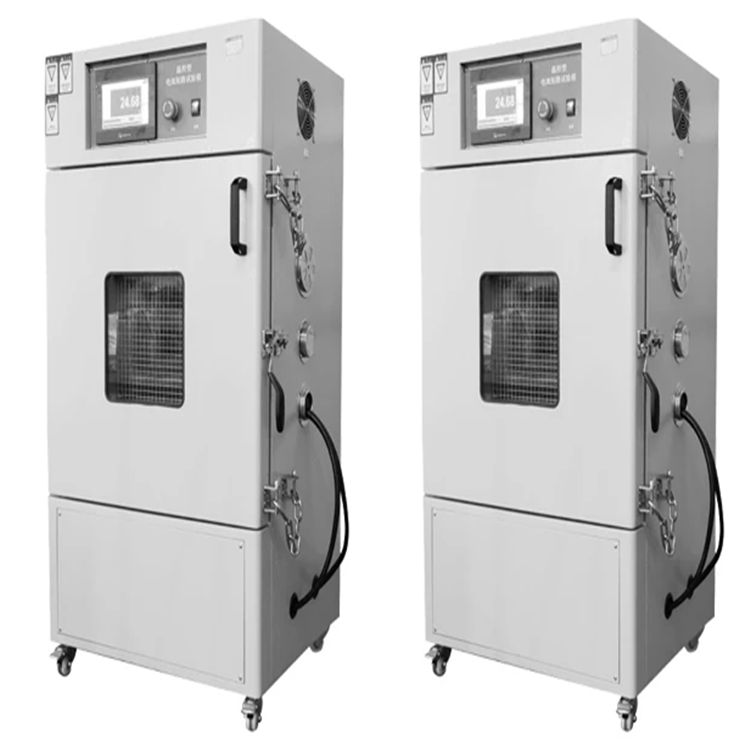


The Battery Short-Circuit Tester is a safety testing system designed to evaluate the behavior of lithium batteries and battery packs under controlled short-circuit conditions. It is developed in accordance with multiple international and national standards, ensuring that test results are consistent, repeatable, and suitable for compliance verification.
The system is engineered with an industrial-grade high-current circuit design, maintaining a loop internal resistance of 80 ± 20 mΩ, as required by testing standards. By using DC electromagnetic contactors, copper busbars, and all-copper terminals, the tester ensures stable current flow, efficient heat dissipation, and reliable operation during high-current impact tests.
This equipment is suitable for laboratory testing, product certification, and battery safety validation in regulated environments.
Application
(1) External short-circuit testing of lithium-ion batteries and battery packs
(2) Safety verification for power batteries and portable battery systems
(3) Certification testing for transportation and compliance requirements
(4) R&D validation and failure analysis of battery systems
(5) Quality inspection in battery manufacturing and testing laboratories
Standards
(1) GB/T 31485-2015 – Safety requirements for power batteries for electric vehicles
(2) GB/T 31241-2022 – Safety requirements for lithium-ion batteries for portable electronics
(3) UN 38.3 – Transport test requirements for dangerous goods (lithium batteries)
(4) IEC 62133 – Safety requirements for portable sealed batteries
(5) UL 1642:2012 – Lithium battery safety standard
Technical Parameters
| Parameter | Specification |
|---|---|
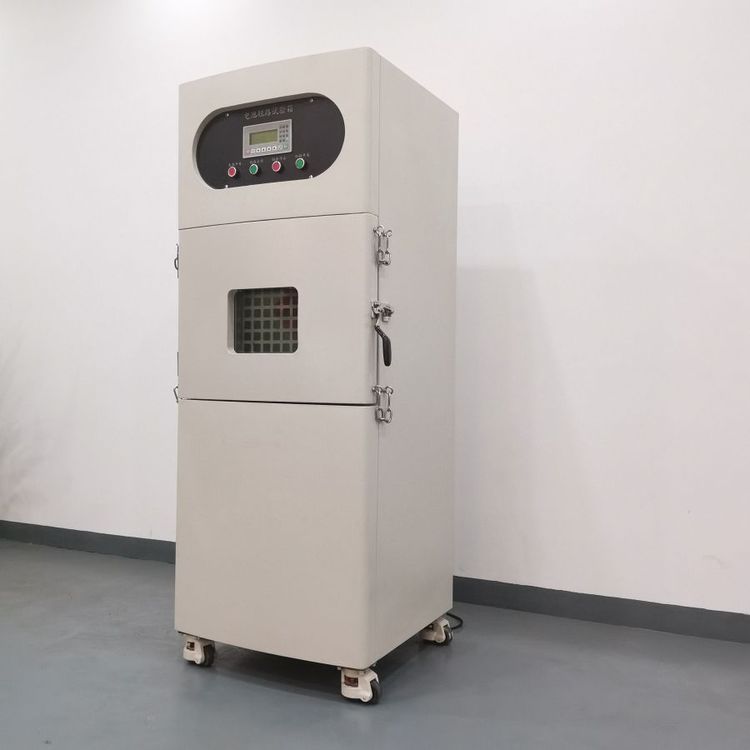
| Inner Chamber Size | 400 × 400 × 400 mm (W × D × H) |
| External Dimensions | 760 × 690 × 1720 mm (W × D × H) |
| Temperature Range | RT +10°C to 150°C |
| Temperature Display Accuracy | 0.1°C |
| Temperature Stability | ±1.0°C |
| Temperature Uniformity | ±2.0°C |
| Heating Rate | (5 ± 2) °C/min |
| Inner Material | SUS304 stainless steel (1.2 mm) |
| Outer Material | Cold-rolled steel with coating (1.5 mm) |
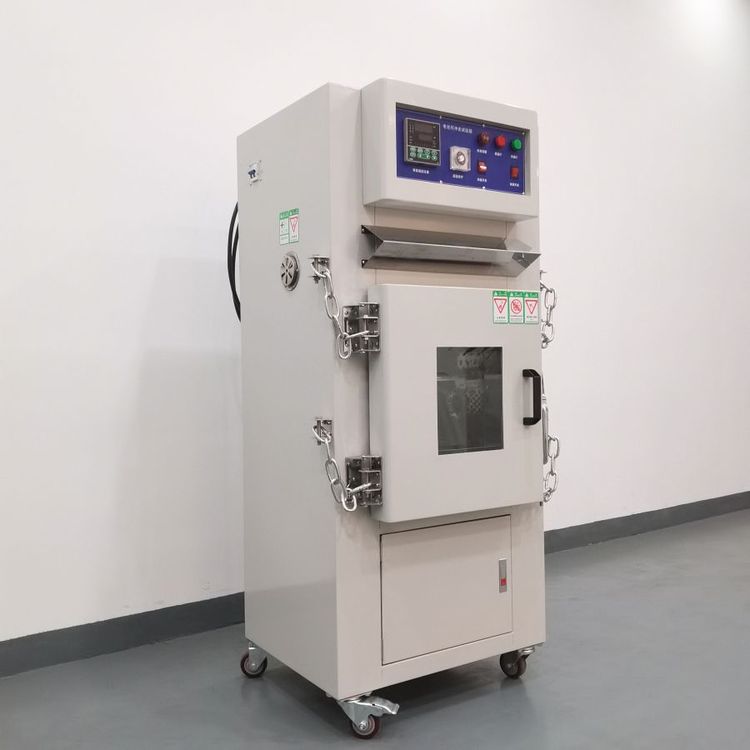
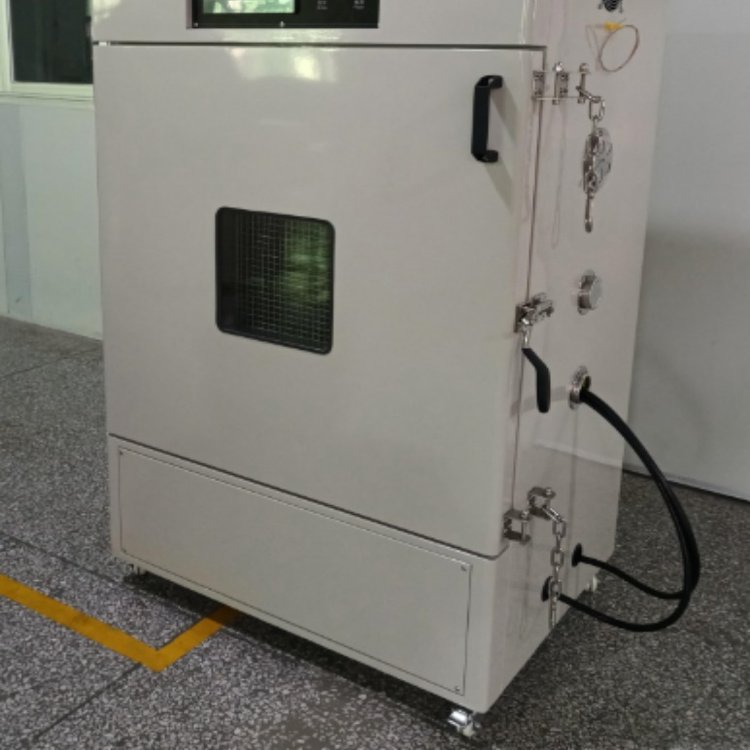
| Observation Window | 250 × 250 mm tempered glass with mesh |
| Test Ports | 2 × φ50 mm ports (for sensor wiring) |
| Insulation Material | High-efficiency glass wool |
| Safety Protection | Over-temperature protection, fuse, alarm system |
| Control Mode | Touchscreen control |
| Air Circulation | Convection system |
| Temperature Acquisition | RT–1000°C, 1 channel |
| Voltage Range | 0–100 V (accuracy ±0.5% FS) |
| Current Range | 0–1000 A (accuracy ±0.5% FS) |
| Data Sampling Rate | 10 Hz |
| Loop Resistance | 80 ± 20 mΩ |
| Pressure Relief Port | 200 × 200 mm (rear side) |
| Mobility | Universal casters |
| Weight | Approx. 170 kg |
| Power Supply | AC 220 V |
| Power | 3 kW |
Features
(1) Designed to meet standardized short-circuit resistance requirements (80 ± 20 mΩ)
(2) Industrial-grade DC contactor ensures reliable high-current switching
(3) Copper busbar structure improves conductivity and heat dissipation
(4) Integrated temperature, voltage, and current data acquisition system
(5) Touchscreen control for intuitive operation and parameter setting
(6) Built-in explosion-proof design with pressure relief port
(7) Observation window for real-time monitoring of test conditions
(8) Multi-layer safety protection including over-temperature alarm and fuse system
(9) Stable thermal chamber with controlled heating environment
Maintenance Information
(1) Regularly inspect contactors and copper connections for wear or oxidation
(2) Calibrate temperature, voltage, and current sensors periodically
(3) Ensure proper ventilation and cleanliness of the chamber
(4) Check safety devices such as pressure relief port and alarms
(5) Perform routine system diagnostics and software checks
FAQ
(1) What is the purpose of a battery short-circuit test?
It evaluates how a battery behaves under external short-circuit conditions, helping identify risks such as overheating, fire, or explosion, and ensuring compliance with safety standards.
(2) Why is the 80 ± 20 mΩ internal resistance important?
This resistance range ensures the test produces the required maximum short-circuit current defined by standards, making results consistent and comparable across tests.
(3) What types of batteries can be tested?
The system is suitable for lithium-ion cells, battery modules, and battery packs used in electric vehicles and portable electronic devices.
(4) What safety features are included in the equipment?
The tester includes over-temperature protection, explosion-proof structure, pressure relief port, alarm systems, and insulated chamber design to ensure safe operation.
(5) What data can be collected during testing?
The system records temperature, voltage, and current data in real time, allowing detailed analysis of battery performance during short-circuit conditions.
Leave Message Get Price